Traffic Barrier Fence (Lane Separator)

Traffic Barrier Fence (Lane Separator)

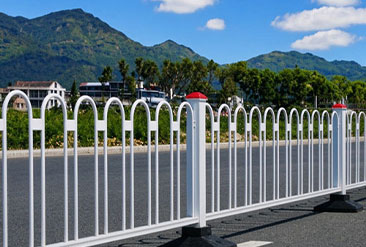
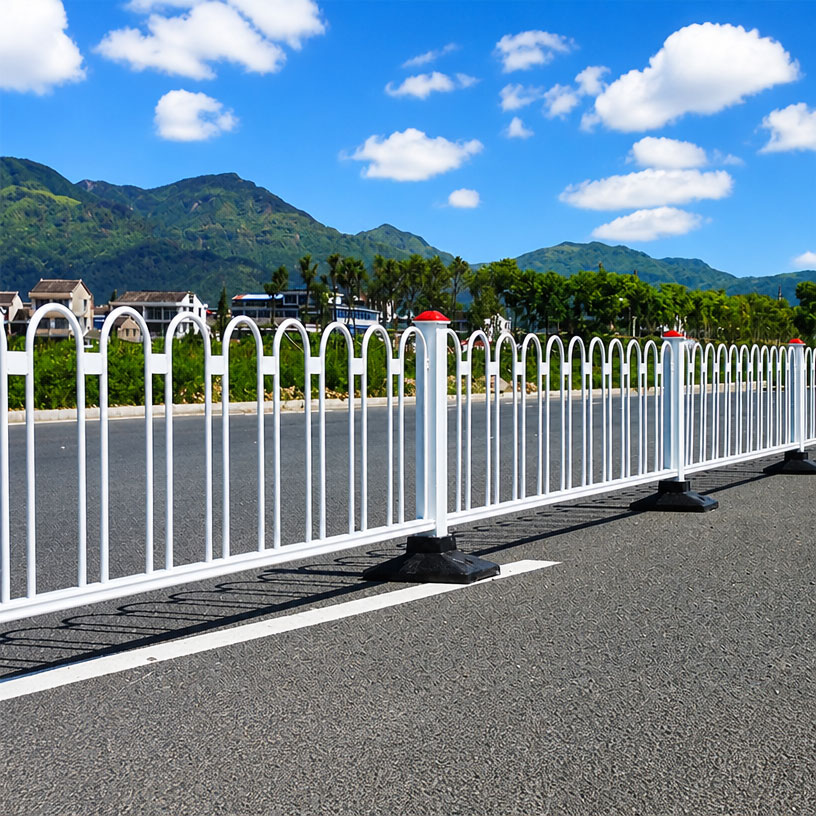
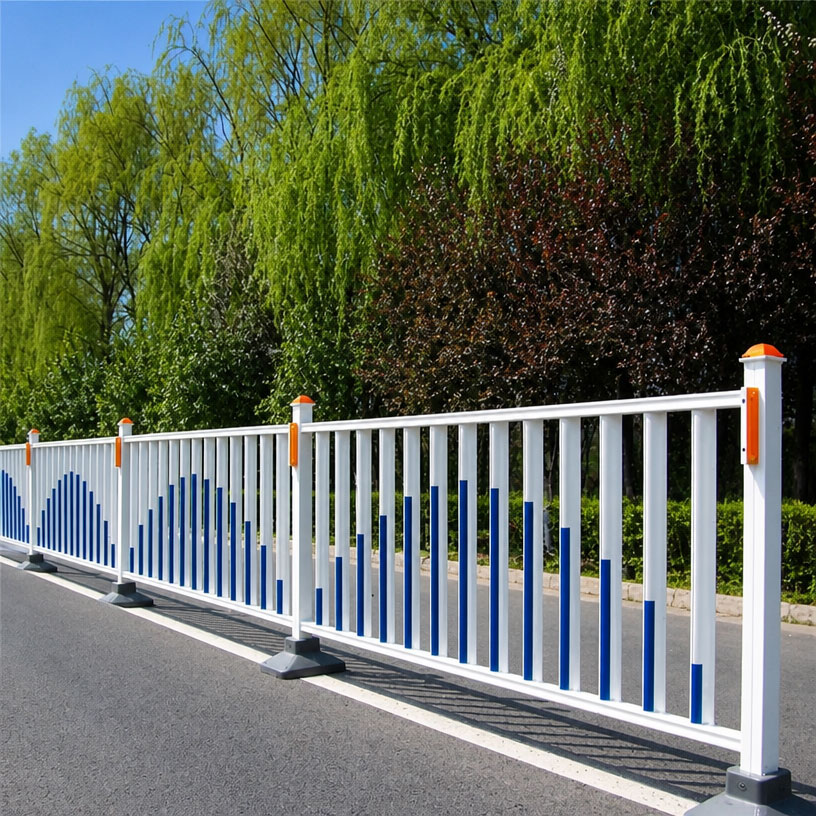
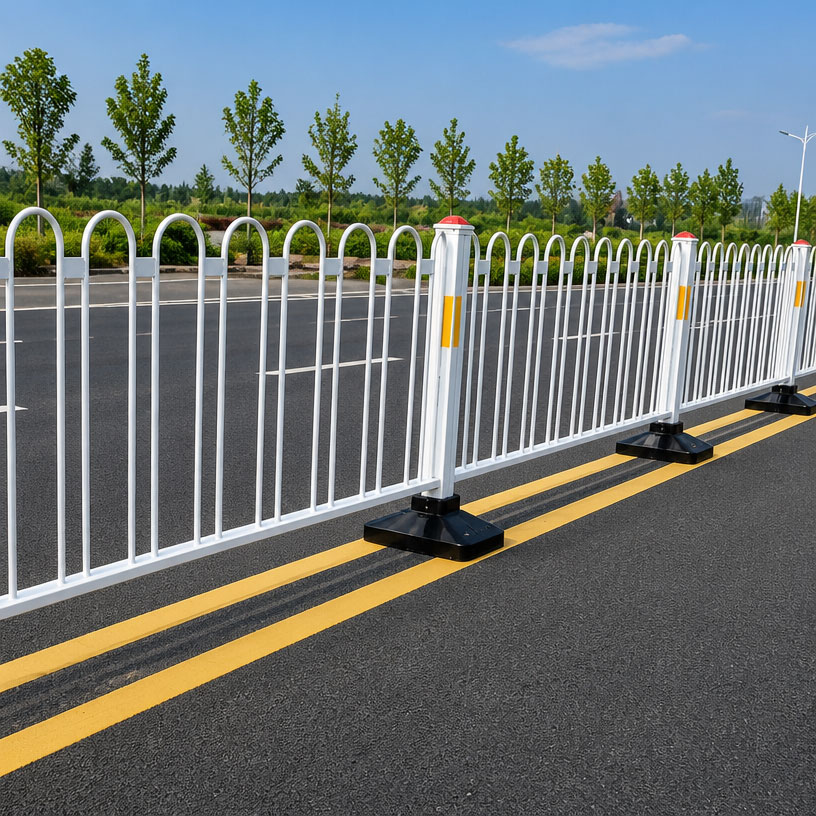
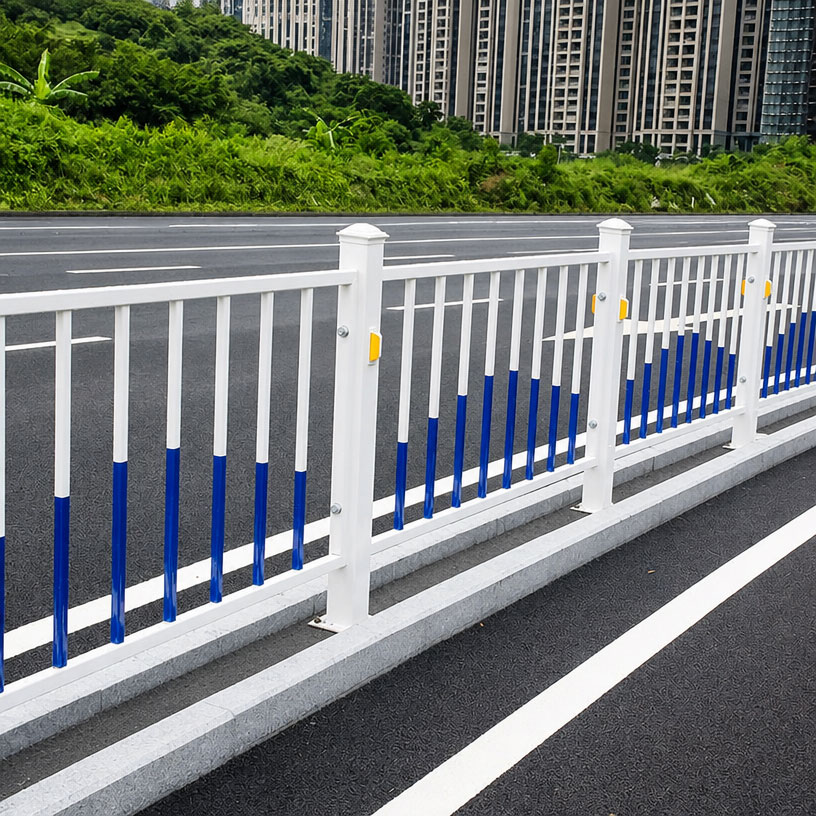
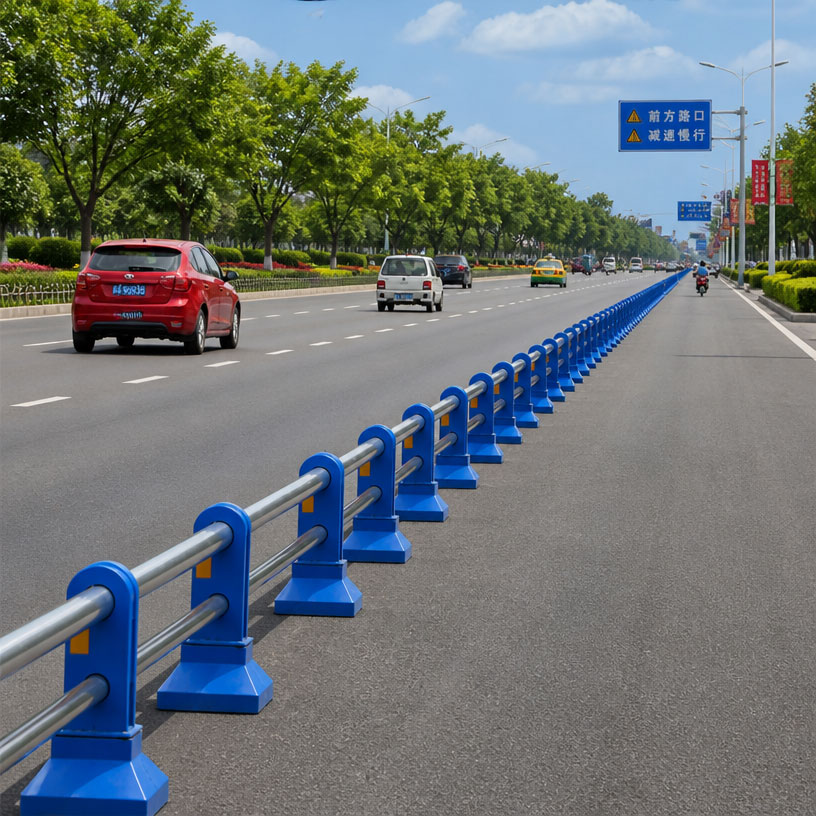
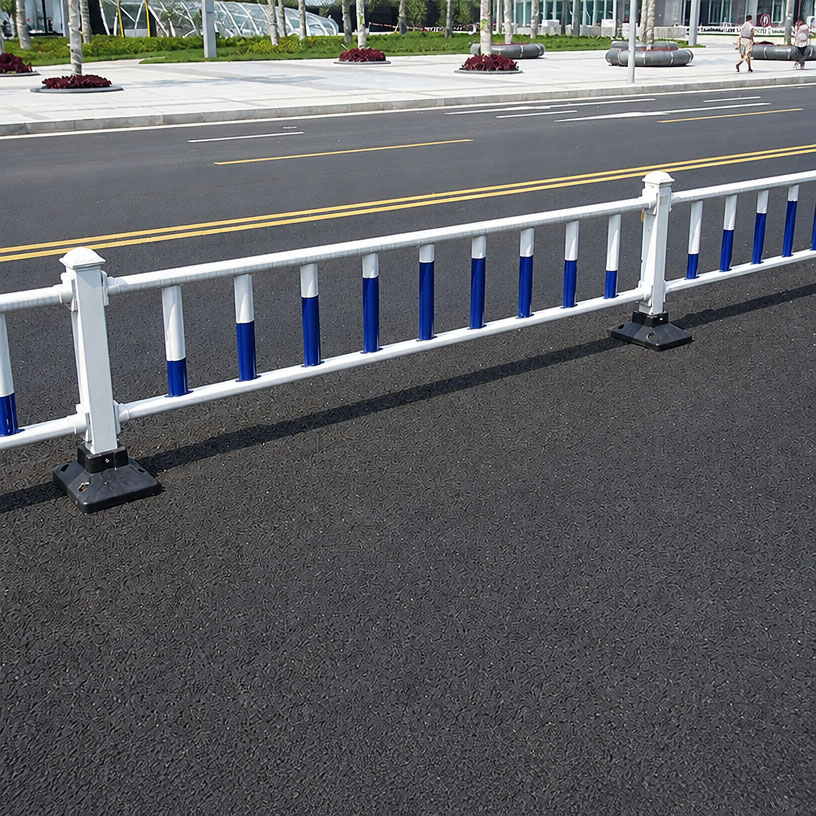
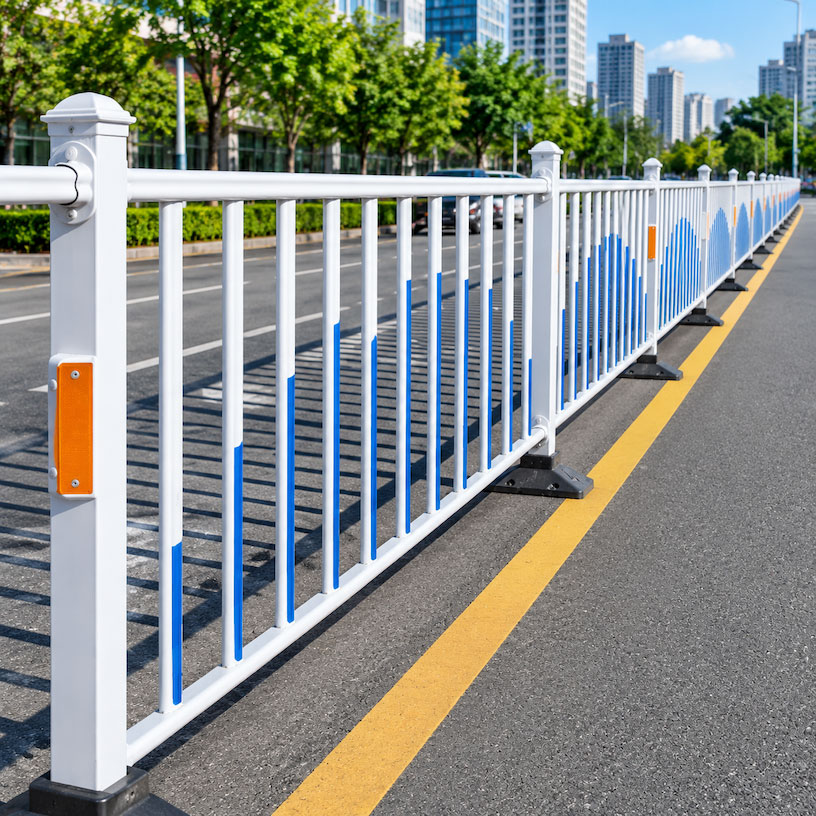
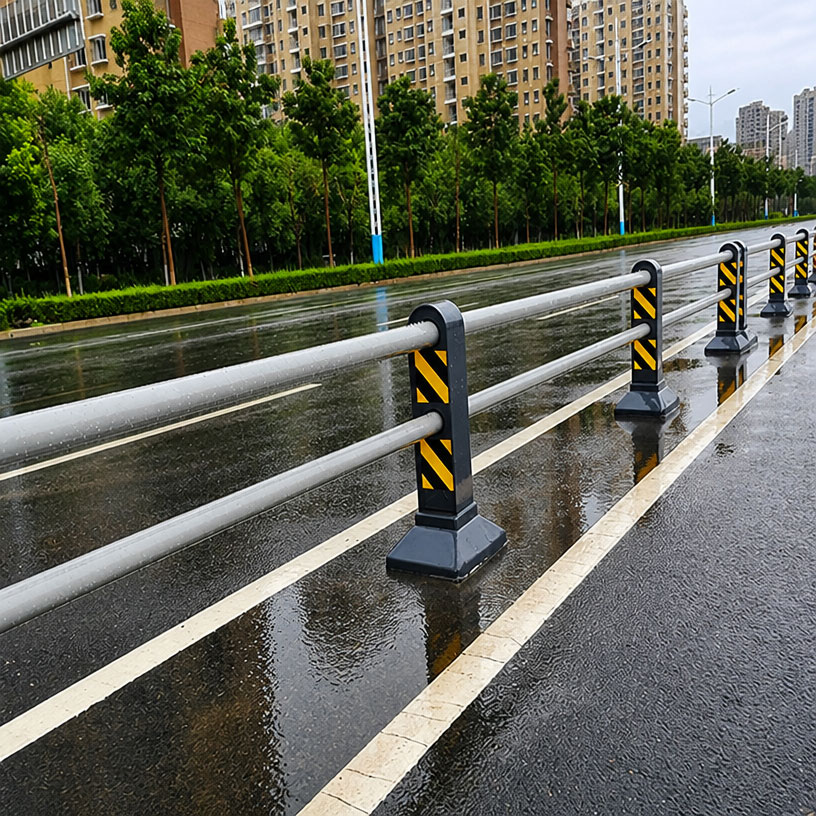
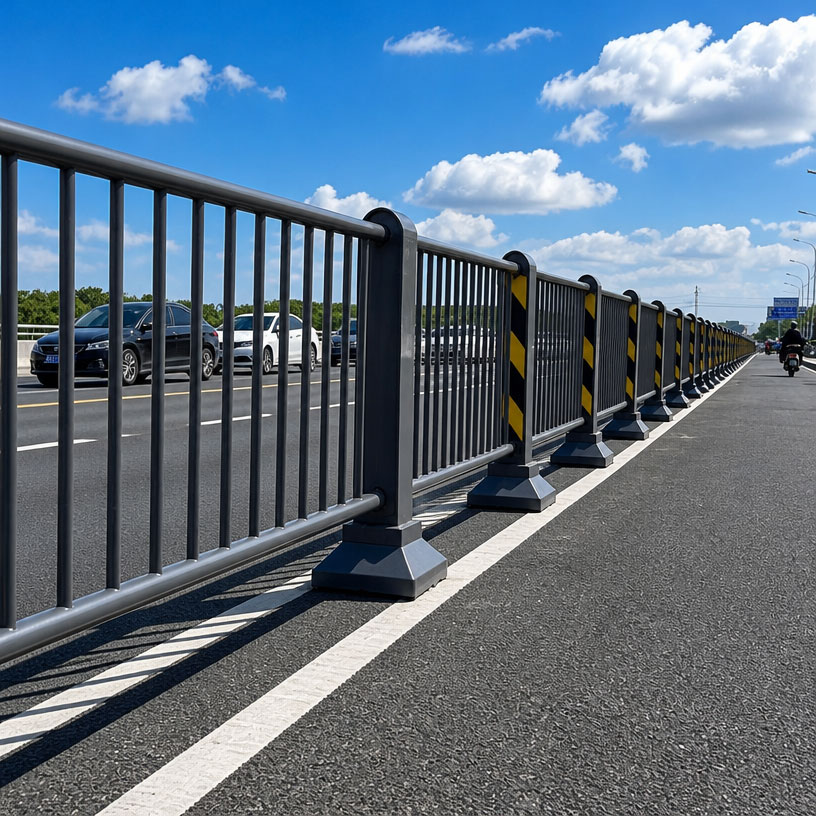
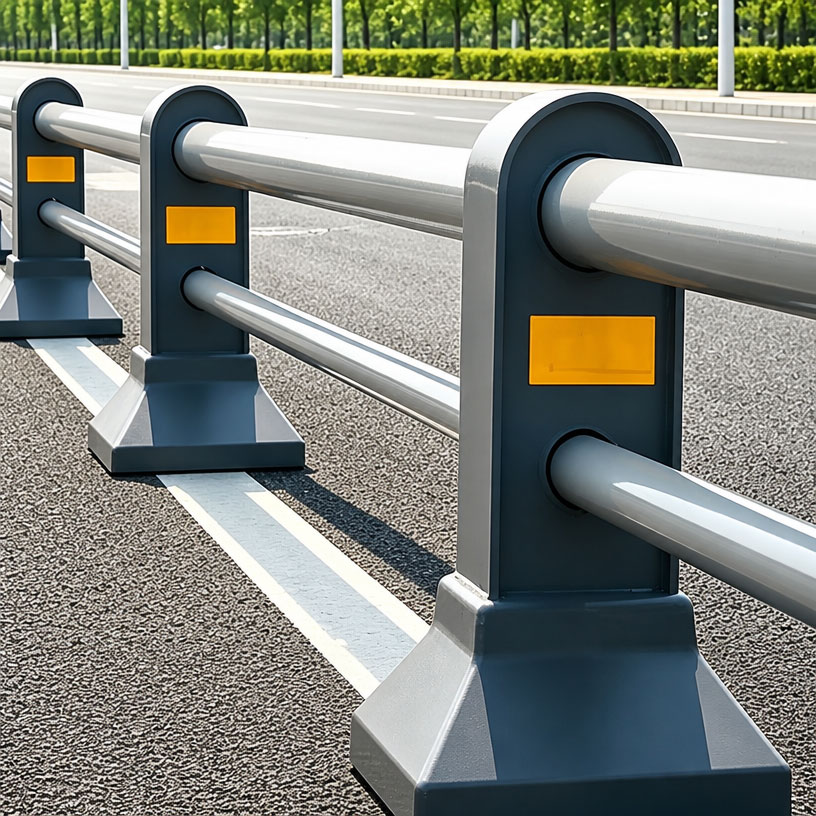
The road isolation fence is used for separating motor vehicles from non motor vehicles, protecting pedestrian edges, and guiding traffic at intersections on urban roads. It consists of galvanized steel pipe crossbars, columns, and stamped galvanized steel bases, assembled in modules of 3m each. Two standard models: Model A with yellow reflective logo (upper crossbar Ø 76, total height 60/80cm), and Model B with yellow and black warning stripes (upper and lower crossbar Ø 48, total height 80/90/1
Send Inquiry
Description

12 PRODUCT RANGES

Covering eight application scenarios
To meet your various needs.

Contact Us

Product details

Product Overview: Traffic Barrier Fence (Lane Separator)

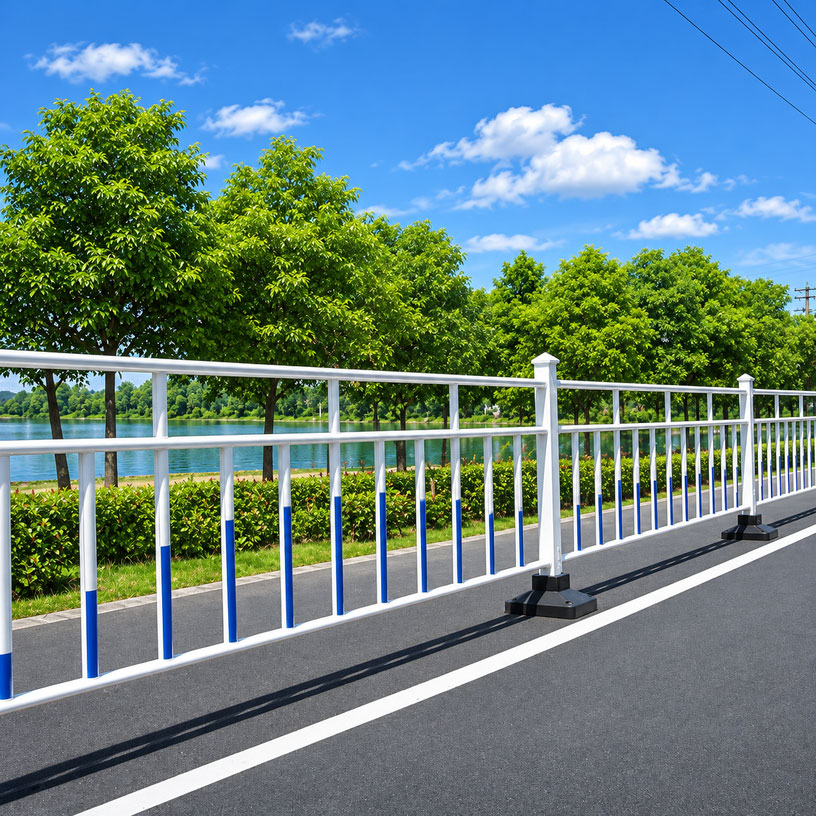
A traffic barrier fence - also sold as road divider fence, lane separator or pedestrian barrier - divides right of way rather than blocking it: it keeps motor vehicles, cyclists and pedestrians each within the space they should use, cutting the sideswipe and crossing accidents that come from mixed traffic. The structure is simple - top rail, bottom rail, posts, and vertical bars or decorative infill, seated on pressed galvanized steel bases, 3 m per section, sections joined at the posts into a continuous line.

Two standard versions divide the work clearly. Version A uses a heavy Ø76 mm top rail at 60 or 80 cm overall height with a yellow reflective sign panel: open, visually light, intended mainly for warning and guidance along footway edges and the outer side of cycle lanes. Version B uses equal Ø48 mm top and bottom rails, a thicker post wall, 80 / 90 / 110 cm overall height and yellow-black warning stripes: longer recognition distance and more impact reserve, intended for main segregation runs, junction channelisation and temporary traffic management. The choice is not about which is taller, but about whether the location needs a warning or a physical division.

The mounting method delivers a benefit that is easy to overlook: ballast bases need no drilling and no embedding, so installation does not affect the road structure, the run can be lifted and moved when traffic is re-routed, and resurfacing does not destroy the fence. The price is that base weight must match local wind load, traffic speed and the length of the continuous run. On open stretches, elevated ramps and coastal wind funnels, bases must be heavier, closer together or supplemented with ballast blocks - a whole run being blown over is the most common failure mode of municipal barrier fencing.

Specifications and Parameters (Version A - Yellow Reflective Panel):

ItemSpecification
Top railGalvanized round tube Ø76 mm
Bottom railGalvanized round tube Ø48 mm
PostsGalvanized steel tube, wall 2.0 mm, anti-corrosion treatment inside and out
BasePressed galvanized steel base 300 x 450 x 180 mm (ballast type)
Overall height60 cm or 80 cm
Section width300 cm
MarkingYellow reflective sign panel
FinishHot-dip galvanized base coat plus powder coating or PVC dipping; colour and reflective film class to project

Specifications and Parameters (Version B - Yellow/Black Warning Stripes):

ItemSpecification
Top railGalvanized round tube Ø48 mm
Bottom railGalvanized round tube Ø48 mm
PostsGalvanized steel tube, wall 2.5 mm, anti-corrosion treatment inside and out
BasePressed galvanized steel base 300 x 450 x 180 mm (ballast type)
Overall height80 cm, 90 cm or 110 cm
Section width300 cm
MarkingYellow-black warning stripes (reflective film class to project)
FinishHot-dip galvanized base coat plus powder coating or PVC dipping; colour and reflective film class to project

Version A versus Version B:

ItemVersion A - Yellow PanelVersion B - Yellow/Black Stripes
Top railØ76 mm heavy tube, greater visual weightØ48 mm, equal top and bottom rails
Overall height60 / 80 cm80 / 90 / 110 cm
VisibilityYellow reflective panel, mainly head-on warningStripes, better at distance and from an angle
SeparationWarning and guidanceTaller and heavier, with physical division
Typical locationFootway edges, outer cycle lane, plazas and entrancesMain segregation runs, junction channelisation, traffic management
Base and fixingPressed galvanized steel base 300 x 450 x 180 mm, ballast, no drillingSame

Product Features:

  • ● Highly visible: yellow panel or yellow-black stripes - colour blocks by day, reflection by night, so the line is readable in rain and fog.
  • ● Modular and fast: 3 m sections joined at the posts, two people can handle assembly with no plant and no site welding.
  • ● Road-friendly: ballast bases sit on the surface - no drilling, no embedding, so resurfacing and traffic re-routing leave the fence reusable.
  • ● Proper corrosion protection: hot-dip galvanized base coat plus powder coating or dipping, with the inside of the tube treated to stop water sitting and rusting from within.
  • ● Re-usable: suited to repeated installation for traffic management and temporary control, so cost per use stays low.
  • ● Configurable: height, section width, colour and reflective film class set to the project and local municipal requirements.

Application Scenarios:

  • ● Urban segregation of cyclists and motor traffic: continuous division between cycle lane and carriageway.
  • ● Footway edge protection: boundaries between footway and carriageway, school and hospital frontages.
  • ● Junction channelisation: around traffic islands and line guidance at turning radii.
  • ● Traffic management and temporary control: temporary separation at roadworks, movable with each stage.
  • ● Plazas and entrances: separation of vehicles and pedestrians at commercial plazas and estate entrances.
  • ● Car parks and estate roads: bay edges and internal traffic separation.

Frequently Asked Questions:

Q: Version A or Version B?
A: Ask whether the location needs a warning or a division. Footway edges, outer cycle lanes and plaza entrances, where warning and guidance matter and sightlines should stay open, take Version A - Ø76 mm top rail with a yellow reflective panel. Main segregation runs, junction channelisation and traffic management, where physical division and long-range recognition matter, take Version B - stripes and up to 110 cm height. One road can use both, in sections.
Q: 60 cm or 110 cm height?
A: By function and by local design rules. 60 - 80 cm is a warning type that does not obstruct pedestrian sightlines, suited to footway edges and landscaped sections; 90 - 110 cm is a division type that stops casual crossing and vehicle encroachment, suited to main segregation runs and expressway service roads. The height must also satisfy the local municipal and traffic authority design requirements.
Q: Is the ballast base heavy enough - will it blow over?
A: It depends on the location. On ordinary urban roads the 300 x 450 x 180 mm pressed galvanized base is sufficient; on open stretches, elevated ramps, bridge decks and coastal wind funnels the pressure is much higher, so posts must be closer, bases heavier or sections shorter. A whole run being blown over is the classic failure of municipal barrier fencing, so wind funnels need a wind-load check rather than a copied standard layout.
Q: Does it need drilling or embedding?
A: No. That is the main advantage of a ballast system - it sits on the surface, leaves the road structure intact and lifts away for resurfacing. Where genuine impact resistance is required at a carriageway edge, a cast-in foundation or a dedicated crash barrier is needed; ballast cannot substitute for that.
Q: Can the markings be customised?
A: Yes. Both the yellow panel of Version A and the stripes of Version B can be supplied to the required reflective film class, colour and pattern, including local municipal standard markings. Film class directly affects night-time recognition distance and is normally stated in the tender documents, so please provide it with the enquiry.
Q: Can planters or other accessories be added?
A: Yes - planters, delineators, warning lamps and small sign plates can be added, but each adds wind load and eccentric load, so base ballast and post connections must be checked at the same time. Accessories should be detachable for maintenance and replacement.
Q: Is maintenance straightforward?
A: Yes. With 3 m modular sections, a damaged section is unbolted and replaced without dismantling the run. Local damage to the coating is touched up with matching paint, and damage to the zinc layer is best treated with zinc-rich paint so corrosion does not start at the damaged point.
Q: What about lead time and packing?
A: Lead time is confirmed against the order once version, height, section width, colour, markings and packing are settled. Rails and posts are bundled, bases palletised, shipped by pallet or full container, with loading photos before dispatch.
Product Inquiry
Company profile

Company profile

View more+
Anping County Kaiyao Wire Mesh Products Co., Ltd. makes fencing and wire mesh in Anping, Hebei. Sixteen product lines serve eight kinds of site: construction, residential, industrial and warehouse, high-security, highway and railway, farm and ranch, riverbank and slope, and municipal road.We do not stack standard panels in a warehouse and wait for someone to pick. Customers give us the site condit...
Our advantages
1
18 years of export experience
Our products have been exported to customers in Northern Europe, North America, Western Europe, Eastern Europe, and other markets.
2
Quality Certification
Our products have been exported to customers in Northern Europe, North America, Western Europe, Eastern Europe, and other markets.
3
OEM/ODM support
Our products have been exported to customers in Northern Europe, North America, Western Europe, Eastern Europe, and other markets.
4
Quality Certification
我们的产品已出口至北欧、北美、西欧、东欧等市场的客户。
5
OEM/ODM support
Our products have been exported to customers in Northern Europe, North America, Western Europe, Eastern Europe, and other markets.
6
Quality Certification
Our products have been exported to customers in Northern Europe, North America, Western Europe, Eastern Europe, and other markets.
Packaging Logistics
Packaging Logistics
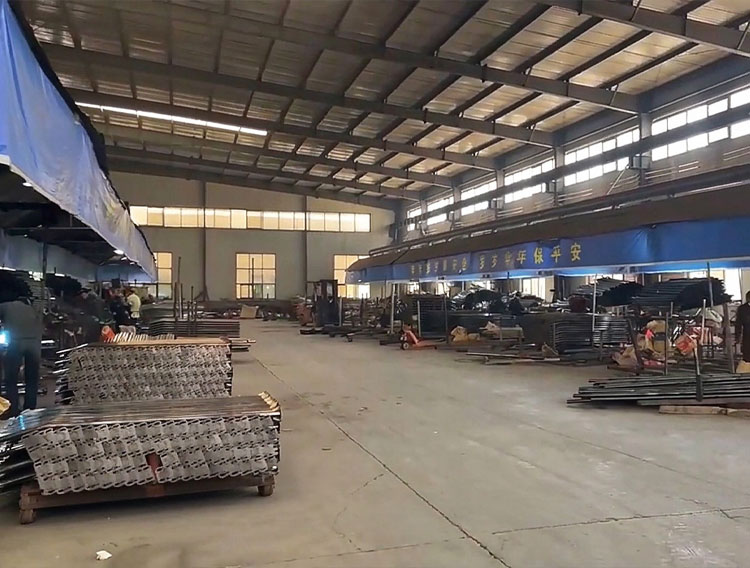
Packaging and transportation are very important links in the export process. Our quality inspection department checks every part before packing. For LCL, we use fumigation-free plywood boxes and wrap plastic film inside to pack industrial vegetable washers. For FCL, large fruit washers and fruit and vegetable washing production lines are directly loaded into containers and wrapped in plastic film to prevent moisture from entering and ensure transportation safety.
  • air freight
  • sea freight
  • Trucking
We use cookie to improve your online experience. By continuing to browse this website, you agree to our use of cookie.

Cookies

Please read our Terms and Conditions and this Policy before accessing or using our Services. If you cannot agree with this Policy or the Terms and Conditions, please do not access or use our Services. If you are located in a jurisdiction outside the European Economic Area, by using our Services, you accept the Terms and Conditions and accept our privacy practices described in this Policy.
We may modify this Policy at any time, without prior notice, and changes may apply to any Personal Information we already hold about you, as well as any new Personal Information collected after the Policy is modified. If we make changes, we will notify you by revising the date at the top of this Policy. We will provide you with advanced notice if we make any material changes to how we collect, use or disclose your Personal Information that impact your rights under this Policy. If you are located in a jurisdiction other than the European Economic Area, the United Kingdom or Switzerland (collectively “European Countries”), your continued access or use of our Services after receiving the notice of changes, constitutes your acknowledgement that you accept the updated Policy. In addition, we may provide you with real time disclosures or additional information about the Personal Information handling practices of specific parts of our Services. Such notices may supplement this Policy or provide you with additional choices about how we process your Personal Information.


Cookies

Cookies are small text files stored on your device when you access most Websites on the internet or open certain emails. Among other things, Cookies allow a Website to recognize your device and remember if you've been to the Website before. Examples of information collected by Cookies include your browser type and the address of the Website from which you arrived at our Website as well as IP address and clickstream behavior (that is the pages you view and the links you click).We use the term cookie to refer to Cookies and technologies that perform a similar function to Cookies (e.g., tags, pixels, web beacons, etc.). Cookies can be read by the originating Website on each subsequent visit and by any other Website that recognizes the cookie. The Website uses Cookies in order to make the Website easier to use, to support a better user experience, including the provision of information and functionality to you, as well as to provide us with information about how the Website is used so that we can make sure it is as up to date, relevant, and error free as we can. Cookies on the Website We use Cookies to personalize your experience when you visit the Site, uniquely identify your computer for security purposes, and enable us and our third-party service providers to serve ads on our behalf across the internet.

We classify Cookies in the following categories:
 ●  Strictly Necessary Cookies
 ●  Performance Cookies
 ●  Functional Cookies
 ●  Targeting Cookies


Cookie List
A cookie is a small piece of data (text file) that a website – when visited by a user – asks your browser to store on your device in order to remember information about you, such as your language preference or login information. Those cookies are set by us and called first-party cookies. We also use third-party cookies – which are cookies from a domain different than the domain of the website you are visiting – for our advertising and marketing efforts. More specifically, we use cookies and other tracking technologies for the following purposes:

Strictly Necessary Cookies
These cookies are necessary for the website to function and cannot be switched off in our systems. They are usually only set in response to actions made by you which amount to a request for services, such as setting your privacy preferences, logging in or filling in forms. You can set your browser to block or alert you about these cookies, but some parts of the site will not then work. These cookies do not store any personally identifiable information.

Functional Cookies
These cookies enable the website to provide enhanced functionality and personalisation. They may be set by us or by third party providers whose services we have added to our pages. If you do not allow these cookies then some or all of these services may not function properly.

Performance Cookies
These cookies allow us to count visits and traffic sources so we can measure and improve the performance of our site. They help us to know which pages are the most and least popular and see how visitors move around the site. All information these cookies collect is aggregated and therefore anonymous. If you do not allow these cookies we will not know when you have visited our site, and will not be able to monitor its performance.

Targeting Cookies
These cookies may be set through our site by our advertising partners. They may be used by those companies to build a profile of your interests and show you relevant adverts on other sites. They do not store directly personal information, but are based on uniquely identifying your browser and internet device. If you do not allow these cookies, you will experience less targeted advertising.

How To Turn Off Cookies
You can choose to restrict or block Cookies through your browser settings at any time. Please note that certain Cookies may be set as soon as you visit the Website, but you can remove them using your browser settings. However, please be aware that restricting or blocking Cookies set on the Website may impact the functionality or performance of the Website or prevent you from using certain services provided through the Website. It will also affect our ability to update the Website to cater for user preferences and improve performance. Cookies within Mobile Applications

We only use Strictly Necessary Cookies on our mobile applications. These Cookies are critical to the functionality of our applications, so if you block or delete these Cookies you may not be able to use the application. These Cookies are not shared with any other application on your mobile device. We never use the Cookies from the mobile application to store personal information about you.

If you have questions or concerns regarding any information in this Privacy Policy, please contact us by email at . You can also contact us via our customer service at our Site.