

Product details
Product Overview: Livestock Panels
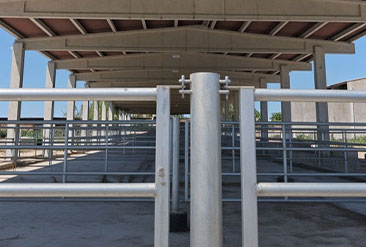
Livestock fencing splits into two families: rolled woven mesh - cattle, deer and horse netting tensioned between posts - and the rigid panel described here. The division of labour is clear. Woven roll covers long boundaries at low cost and follows the ground; panels handle high-value, frequently changed enclosures, with high impact resistance and full portability. On a working farm it is usually the panel that is used every day: moving stock, loading out, isolating a sick animal, penning lambs, holding a mare for the farrier.
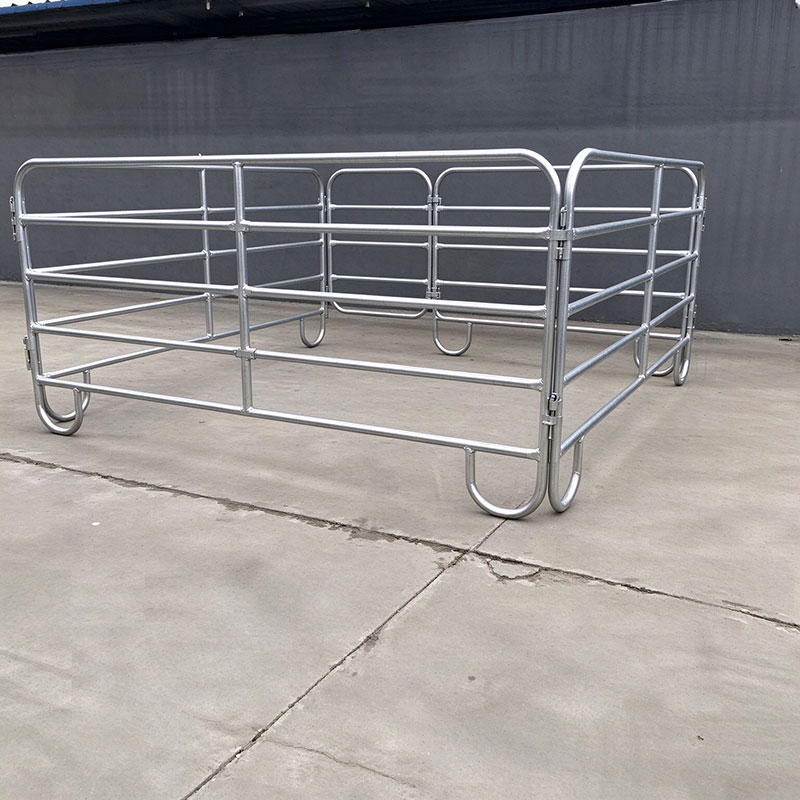
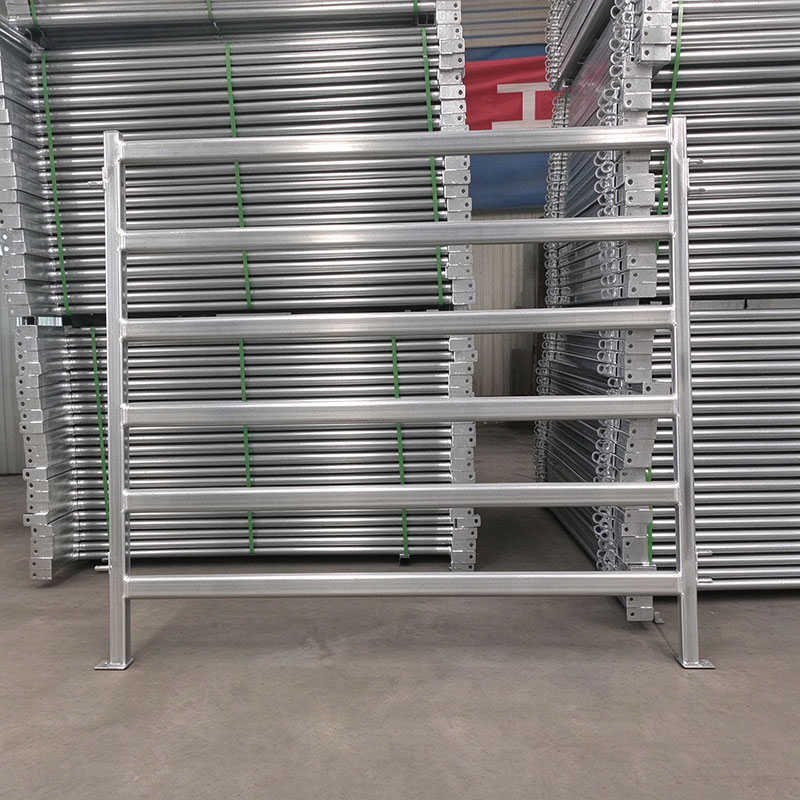
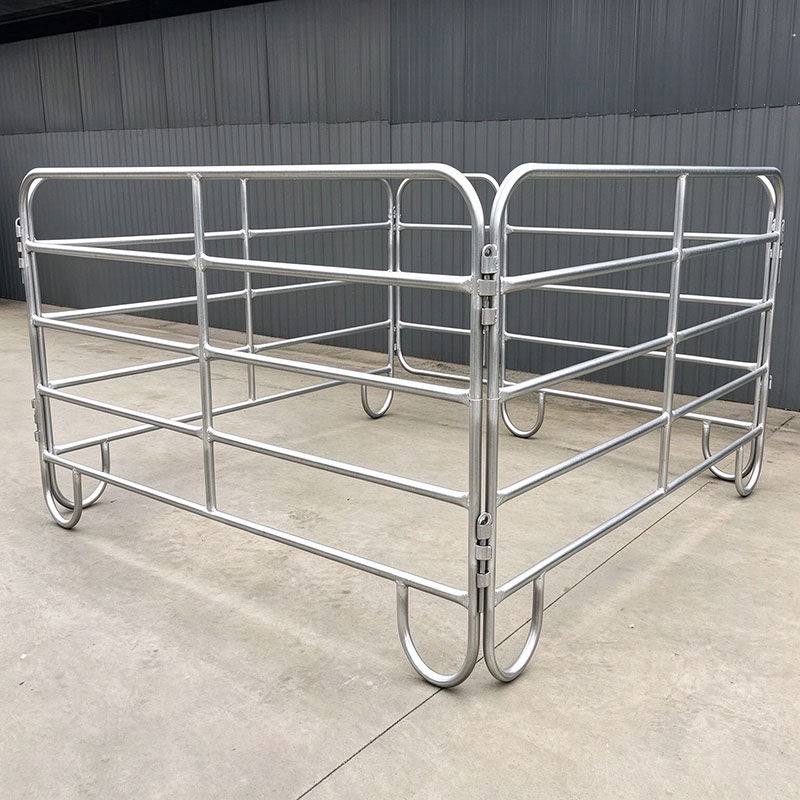
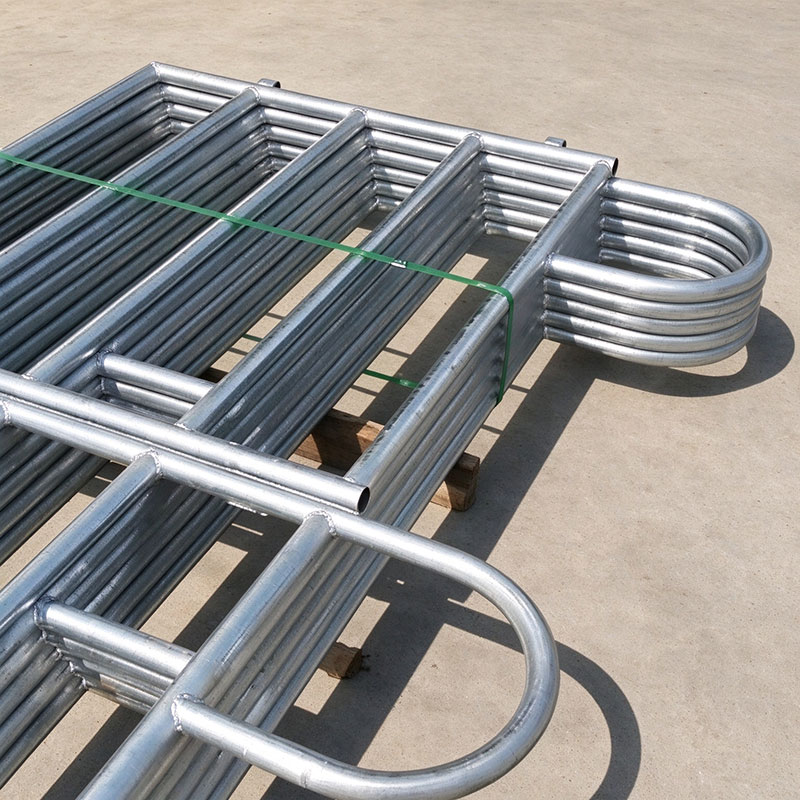
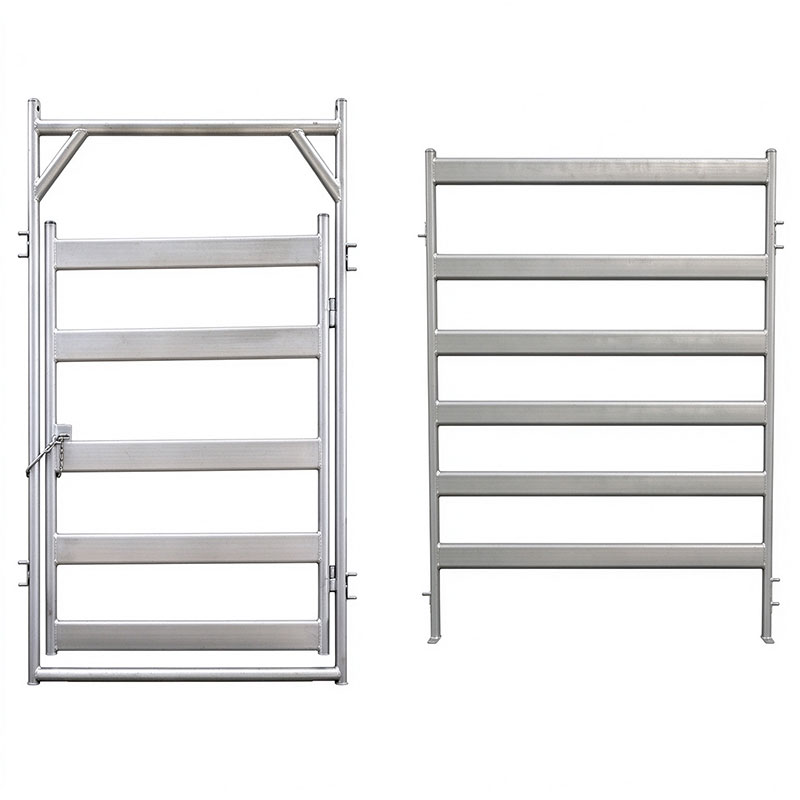
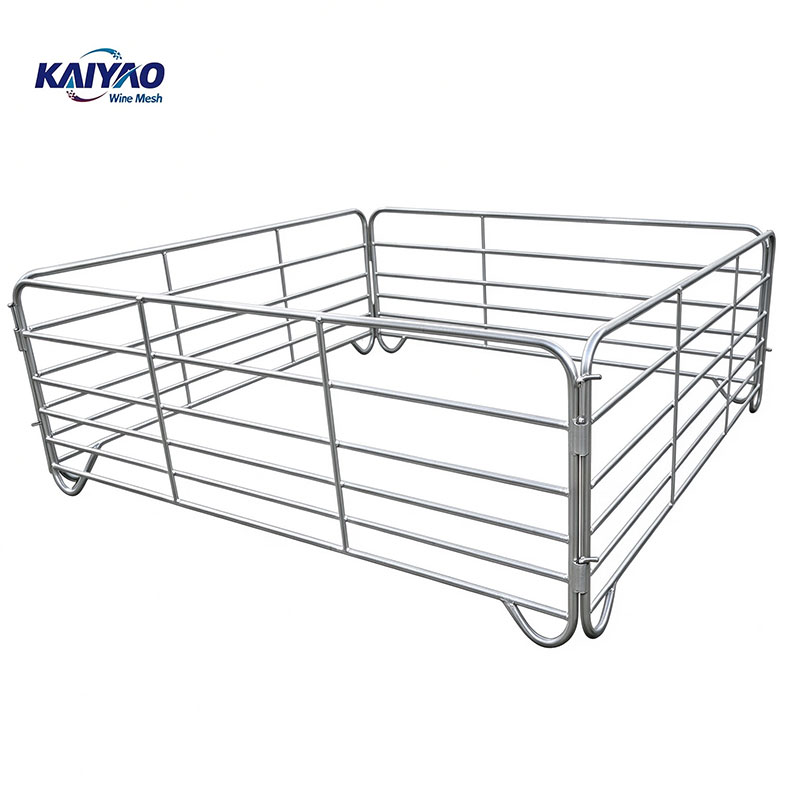
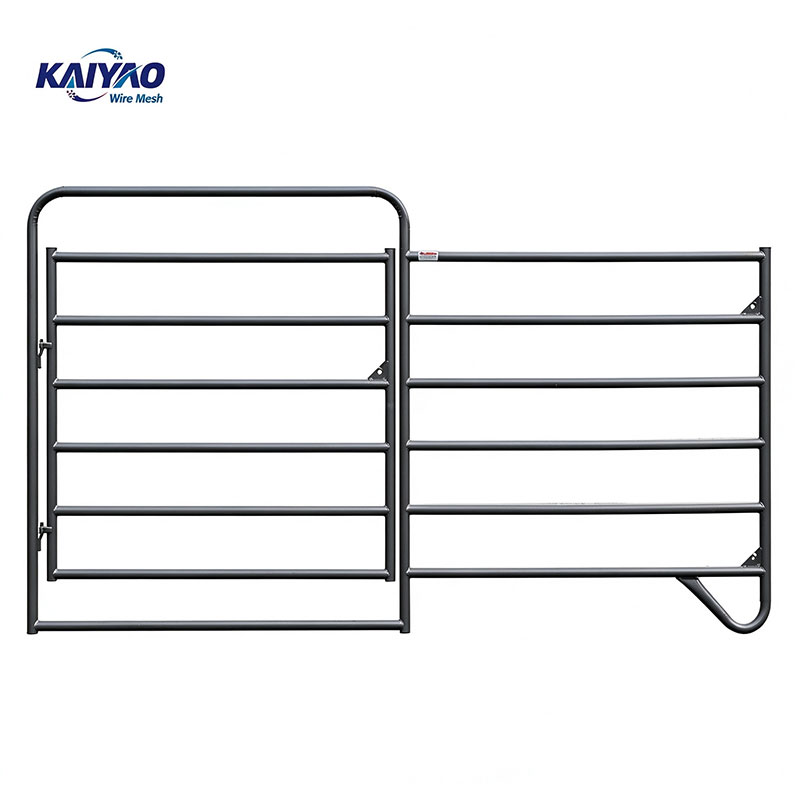
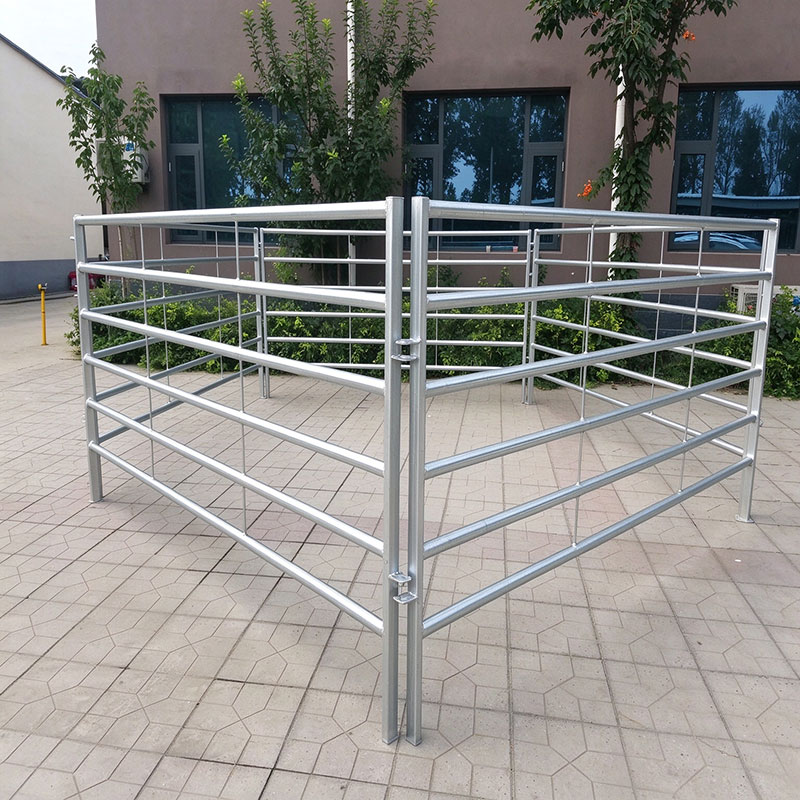
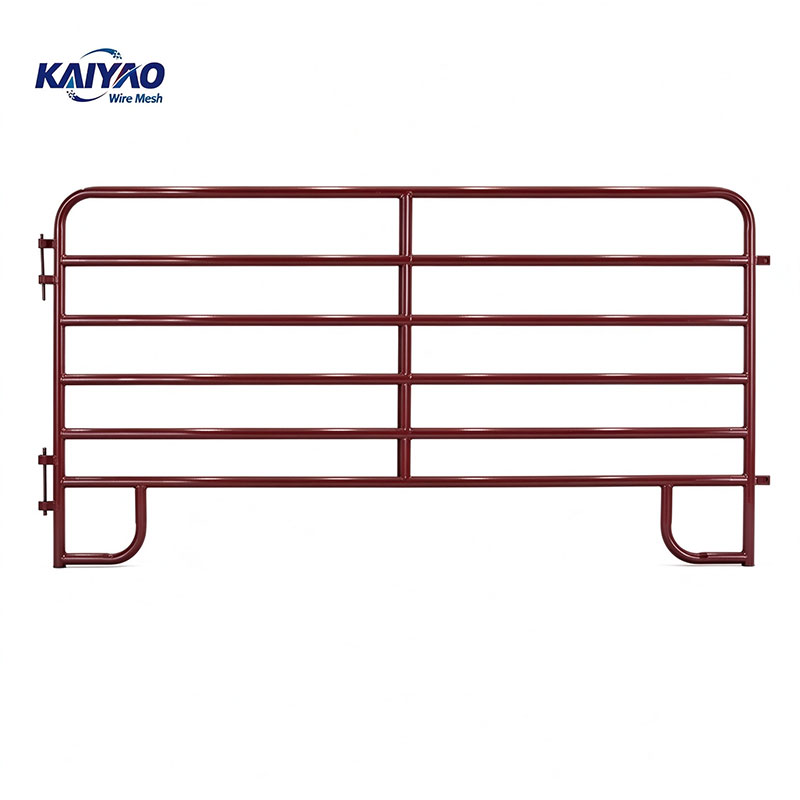
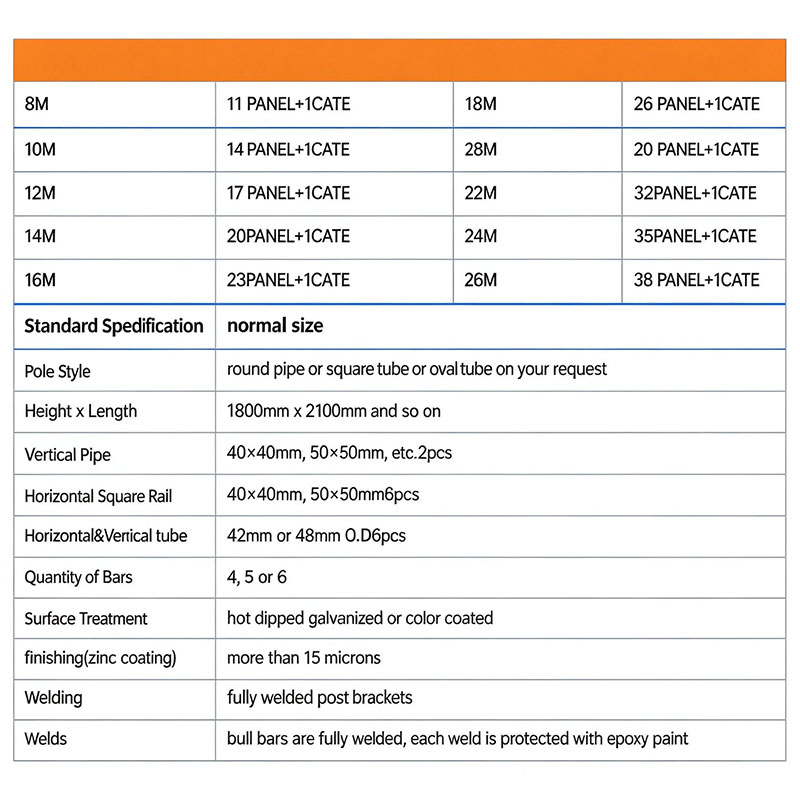
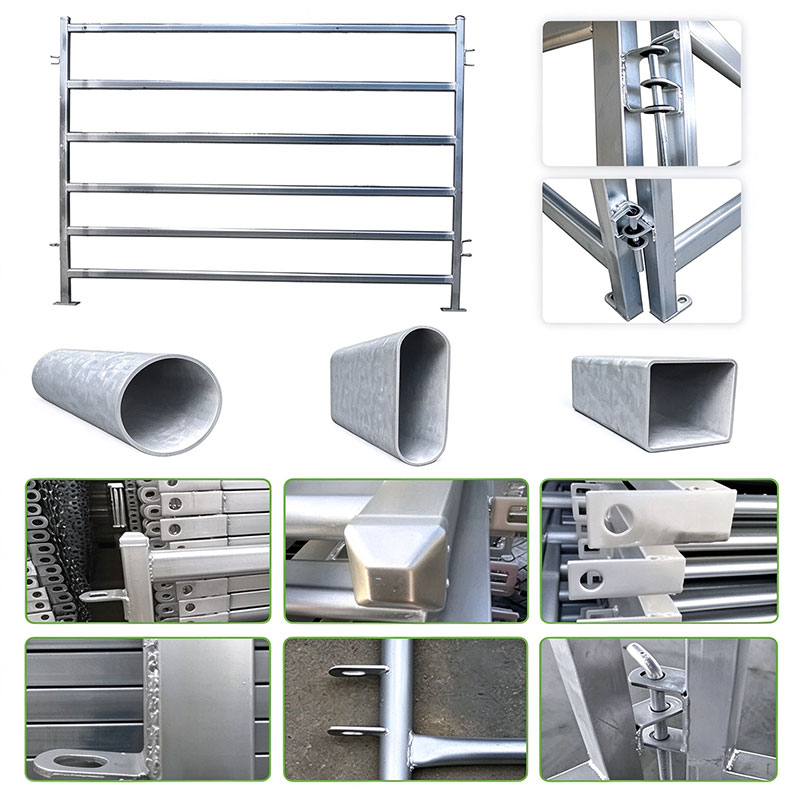
A panel is a rigid tube frame with welded mesh: six horizontal rails - round tube at O32 or O42, square tube at 40x40 or 50x50, or oval tube from 30x60 up to 42x115 - with verticals welded at a pitch set by the species, and lugs and feet welded at the ends with pins supplied. Panels join by dropping pins through the lugs, so two people and a hammer can build a pen and take it down just as fast. That is what makes it more practical than concrete or timber posts. Wall comes in 1.6 mm and 2.0 mm, with 2.0 mm for cattle and horses, where body weight and impact are greatest.
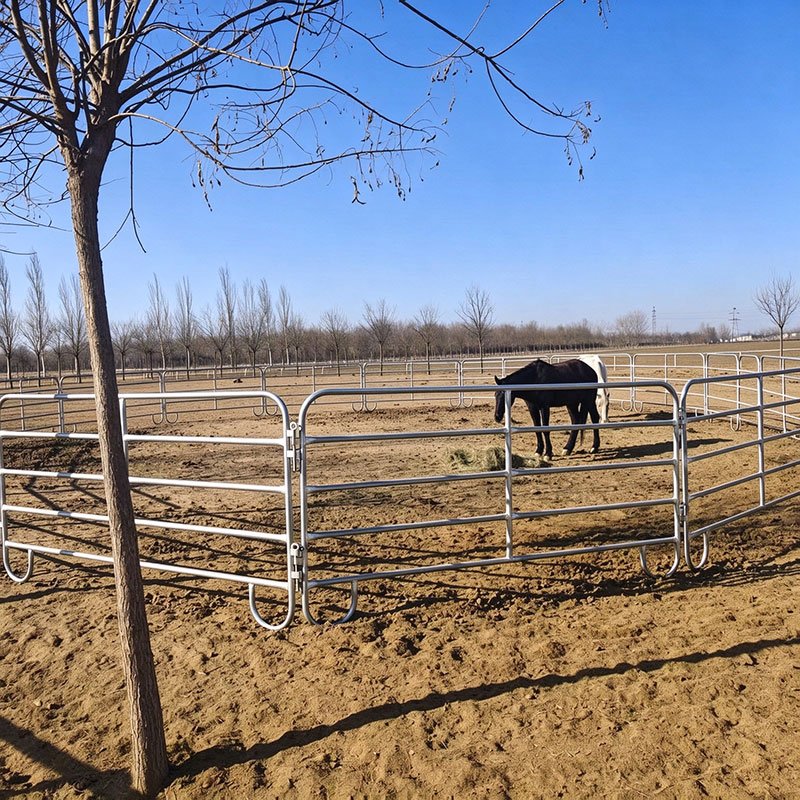
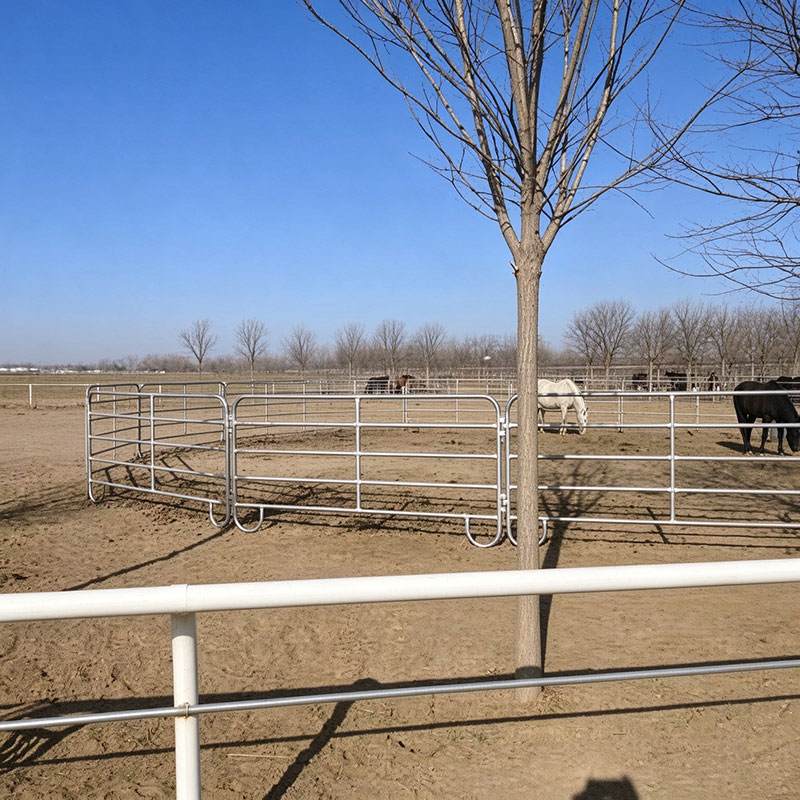
Sizes follow the species, not the price list. The horse panel is 1.5 m or 1.8 m high and 2.4, 3, 3.6, 4.2 or 4.8 m long, with O32 to O48 verticals and O25 to O42 horizontal reinforcement: horses jump and fight, so both height and rail strength have to be there. The sheep panel is only 1.0, 1.1 or 1.2 m high and 2.1 or 2.8 m long, with 40x40 square posts and 30x60 oval rails, because sheep do not jump high and extra height is simply wasted metal. Cattle take 1.8 m with 2.0 mm wall, where the rails must absorb pushing and butting.
Hot-dip galvanizing is the standard finish, using pre-galvanized tube; the welds burn the zinc off, so they must be zinc-rich coated afterwards or the whole panel dipped. That is the detail to inspect on delivery: are the welds full, and is there repair coat around them. Galvanizing the finished panel gives the best protection but costs more and takes longer, so it has to be specified in the order.
Specifications (Horse Panel):
| Item | Specification |
|---|---|
| Height | 1.5 m / 1.8 m |
| Length per panel | 2.4 / 3 / 3.6 / 4.2 / 4.8 m |
| Verticals | O32 / O42 / O48 mm |
| Horizontal rails | O32 / O42 / O48 mm, six per panel |
| Horizontal reinforcement | O25 / O38 / O32 / O42 mm |
| Wall thickness | 1.6 mm / 2.0 mm |
| Surface finish | Hot-dip galvanized (pre-galvanized tube; full dipping to be confirmed in the order) |
| Connection | Welded lugs with pins, joined and dismantled on site |
| Note | Reference range; size, tube diameter and wall are made to order. Dimensions and weights subject to confirmation. |
Specifications (Sheep and Cattle Panel):
| Item | Specification |
|---|---|
| Height | 1.0 / 1.1 / 1.2 m |
| Length per panel | 2.1 / 2.8 m |
| Square post | 40 x 40 mm |
| Oval rail | 30 x 60 mm |
| Wall thickness | 1.6 mm / 2.0 mm |
| Surface finish | Hot-dip galvanized |
| Connection | Lugs and pins; feet supplied for temporary ground fixing |
| Note | Reference range, made to pen size and species. Dimensions subject to confirmation. |
Three Frame Types:
| Frame | Horizontal rails | Verticals | Fittings | Use |
|---|---|---|---|---|
| Round tube | O32 / O42 mm round, six | O32 / O42 mm round | 4 lugs, 2 rain caps welded on, 2 pins per panel | General farm penning; balanced bending and torsion, the most common |
| Square tube | 40x40 / 50x50 mm square, six | O32 / O42 mm round | 2 lugs, 2 L-lugs, 2 rain caps, 2 feet, 2 pins per panel | Where panels must stand firmer and form right-angled pens often |
| Rectangular post with oval rails | 30x60 / 40x80 / 42x115 / 50x70 mm oval, six | 40x40 / 50x50 mm square | As square tube (2 lugs, 2 L-lugs, 2 caps, 2 feet, 2 pins) | Higher appearance and impact demand; studs and display pens |
Note: the three frame types are commonly 1.0x2.1 m, 1.0x2.9 m and 1.8x2.1 m; other sizes to order. Frame type and fitting combination are confirmed in the order.
Selection by Species:
| Species | Height | Wall | Key point |
|---|---|---|---|
| Horse | 1.5 / 1.8 m | 2.0 mm | Horses jump and fight: rail count and strength come first, and vertical pitch must not trap a hoof |
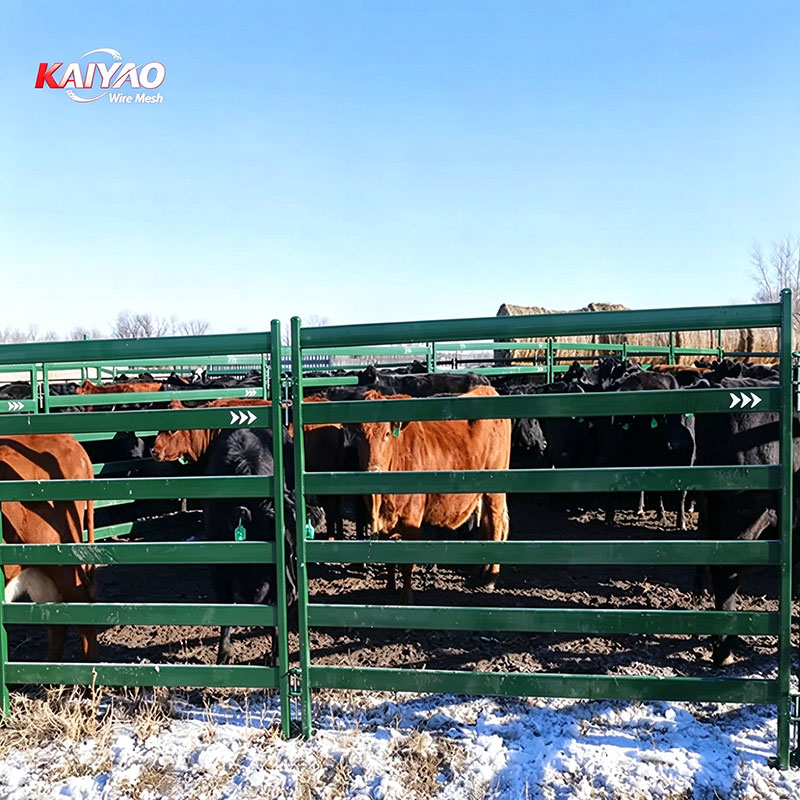
| Cattle and dairy | 1.8 m | 2.0 mm | Highest butting load; the lug and pin joint takes the concentrated force and should be heavier |
| Sheep | 1.0 - 1.2 m | 1.6 mm | Sheep do not jump high, so a low panel is enough; watch the bottom gap so lambs cannot squeeze out |
| Deer | 1.8 m and above | 2.0 mm | Violent when panicked; tighten post spacing and add a top rail |
| Loading and restraint | 1.5 m | 1.6 / 2.0 mm | Lightness and fast assembly matter; feet and pins supplied |
Panel versus Rolled Woven Mesh:
| Item | Panel type (this product) | Cattle / woven roll |
|---|---|---|
| Form | Rigid welded tube frame, one piece | Rolled woven mesh tensioned between posts |
| Coverage | 2.1 - 4.8 m per panel, fixed height | 50 or 100 m per roll, height set by the roll |
| Impact | High; the frame takes the load as a whole | Medium; the mesh flexes and absorbs energy |
| Portability | High; dismantled, moved and re-built | Low; effectively fixed once installed |
| Ground | Level ground mainly; slope needs packing or stepping | Good, follows undulating ground |
| Cost per metre | Higher | Lower |
| Typical use | Stock movement, loading races, isolation pens, temporary pens, arenas | Farm boundaries, long runs, woodland enclosure |
Product Features:
- ● Impact resistant: the tube frame takes load as one body and absorbs pushing and butting from cattle and horses; a damaged panel is replaced on its own.
- ● Dismantle and re-build: lug and pin joints need no welding or special tools, so pens change with the herd.
- ● Portable: a single panel is light enough for two people to carry and assemble, which suits moving stock, loading out and isolation work.
- ● Species-graded sizes: horses, cattle and sheep each have a matching height and wall, so the heaviest specification is not applied where it is not needed.
- ● Galvanized: pre-galvanized tube copes with outdoor and slurry conditions; the weld treatment is fixed in the order.
- ● Low maintenance: no ropes and no wearing parts; one damaged panel is re-ordered instead of rebuilding a run.
Application Scenarios:
- ● Paddock division and rotational grazing: break the pasture into blocks and move the panels with the grass.
- ● Stock movement and loading races: form a temporary race to the lorry or the crush.
- ● Isolation and hospital pens: observation of new stock, isolation of a sick animal, built and struck as needed.
- ● Lambing and calving pens: separate lambs and calves, with a low panel that staff can step over.
- ● Arenas and stable yards: training rings, warm-up areas, temporary horse pens with a tidy appearance.
- ● Shows and sales: live display and auction pens, quick to erect and re-usable.
Installation and Fittings:
Ground: panels stand on the surface, so assemble on firm level ground. On soft or muddy ground lay timber or a hardcore pad and fix the feet, otherwise a pushing animal will walk the whole run out of line.
Assembly sequence: stand the corner panel with temporary bracing, then pin the straight runs in sequence, and finally line and square the pen. Every lug needs its pin - one missing pin is the weak point of the whole run.
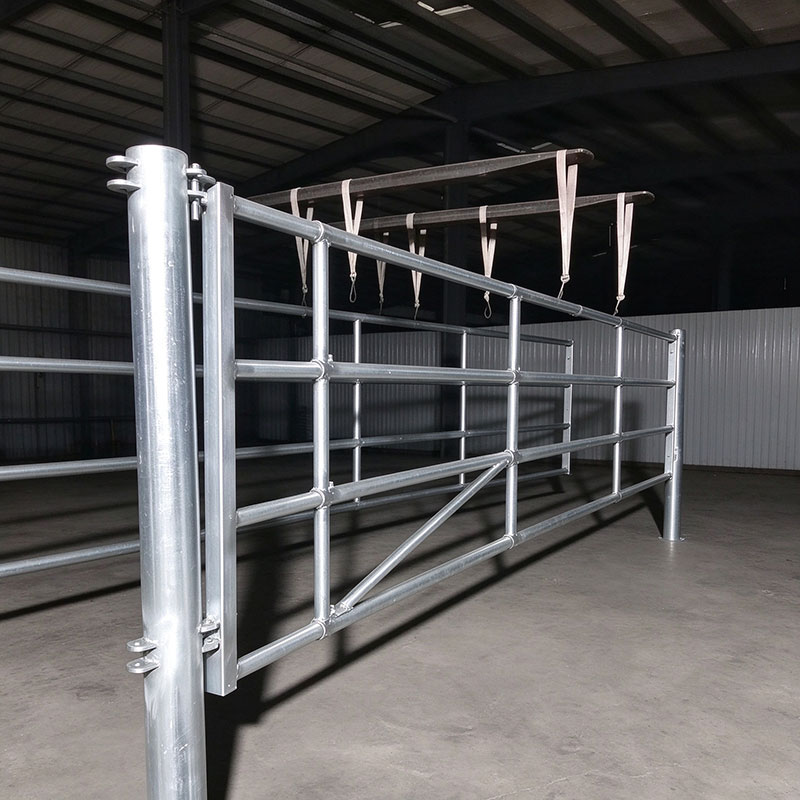
Corners and ends: corners take the highest load, so add a diagonal brace or tie the corner panel to a ground rail. Doorways take a dedicated gate panel, with width set by the stock and any vehicle using it.
Fittings: lugs, L-lugs, rain caps, feet and pins are standard. Rain caps are welded over the tube ends to keep water out; an uncapped tube end is a classic rust starting point.
Availability note: panels are a standard supporting category for us, and the three frame types with horse and sheep sizes can be arranged. Special heights, non-standard lengths, full dipping and large fitting quantities need factory confirmation. Please confirm minimum quantity and lead time with our sales team.
Frequently Asked Questions:
Company profile
Company profile
View more+
Our advantages
 18 years of export experience
 Quality Certification
 OEM/ODM support Quality Certification OEM/ODM support Quality Certification
Packaging Logistics

-
 air freight
-
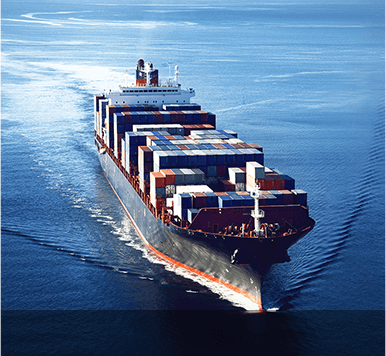 sea freight
-
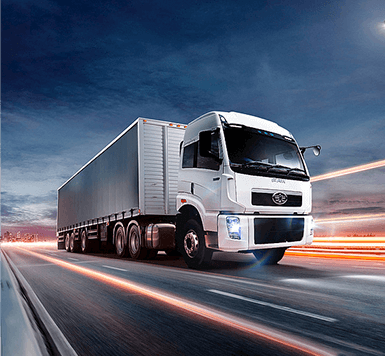 Trucking