Steel Grating

Steel Grating

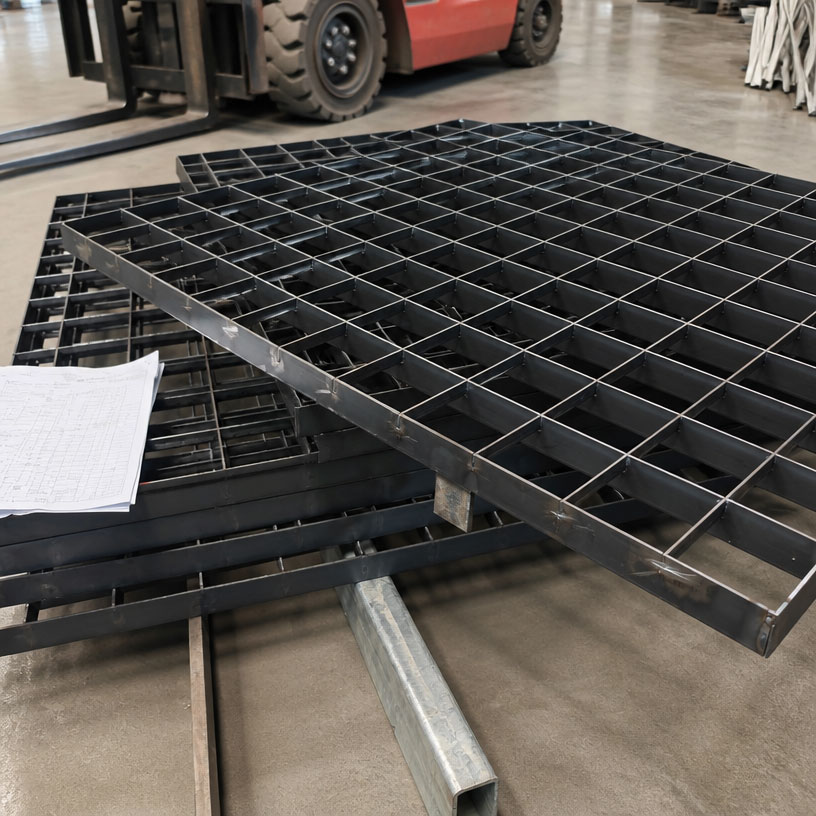
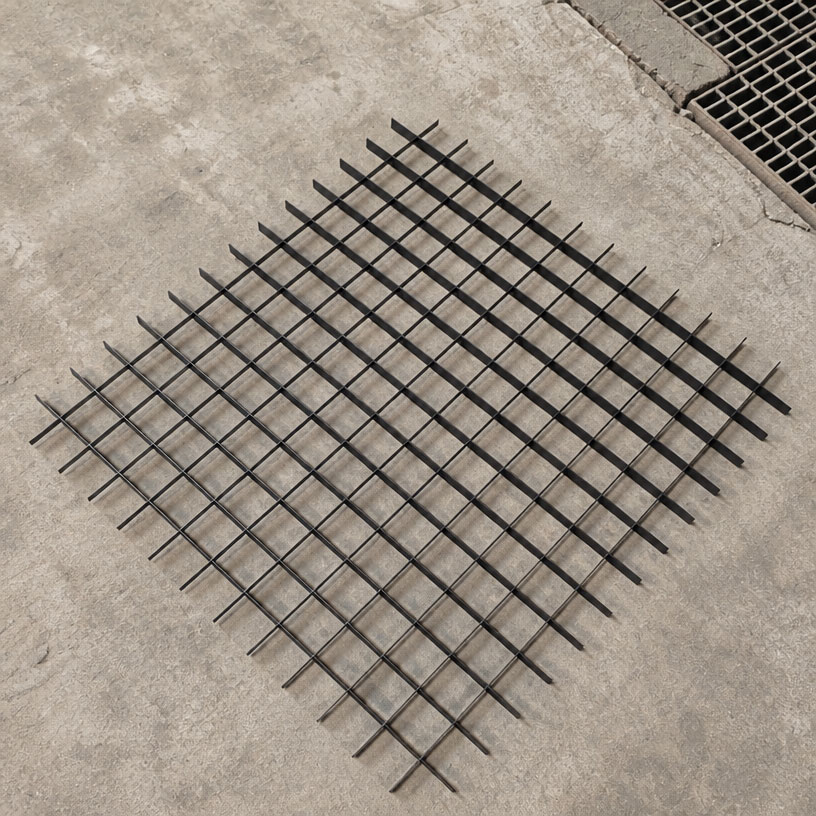
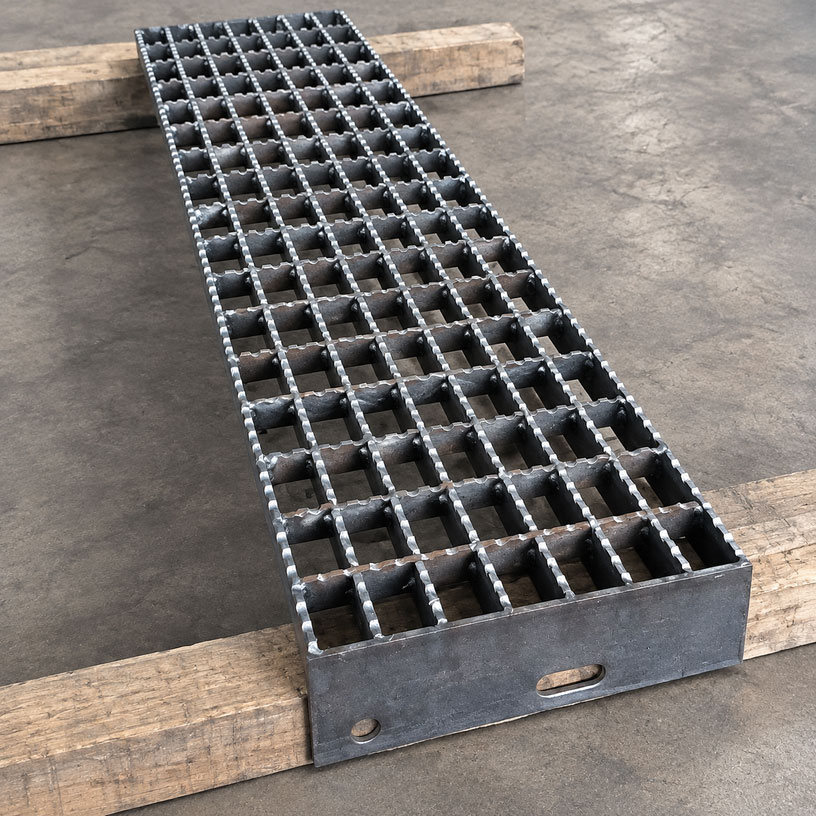
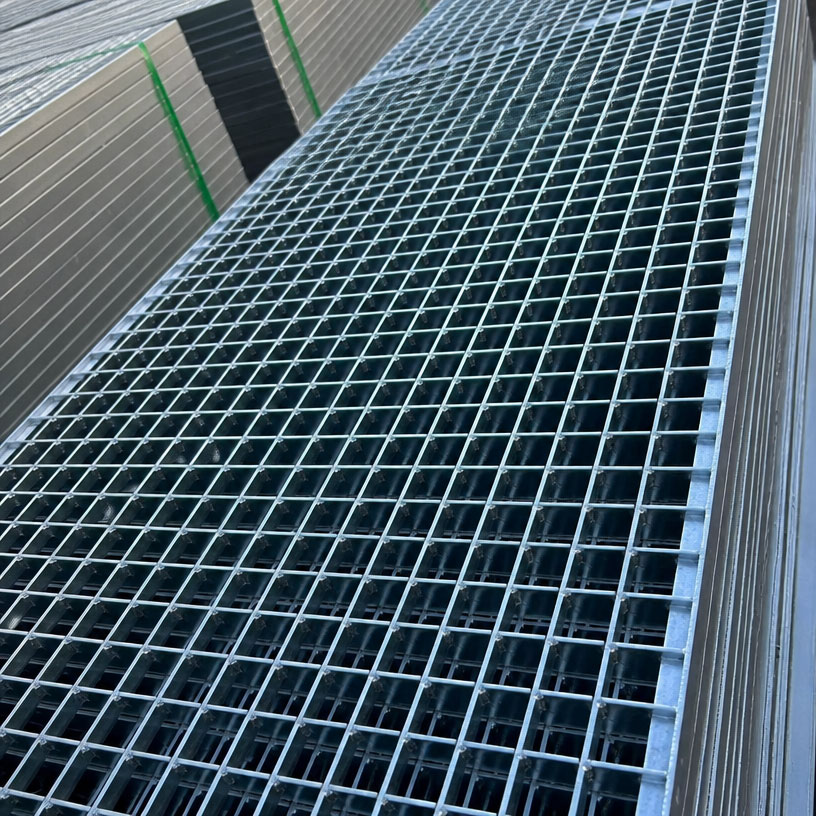
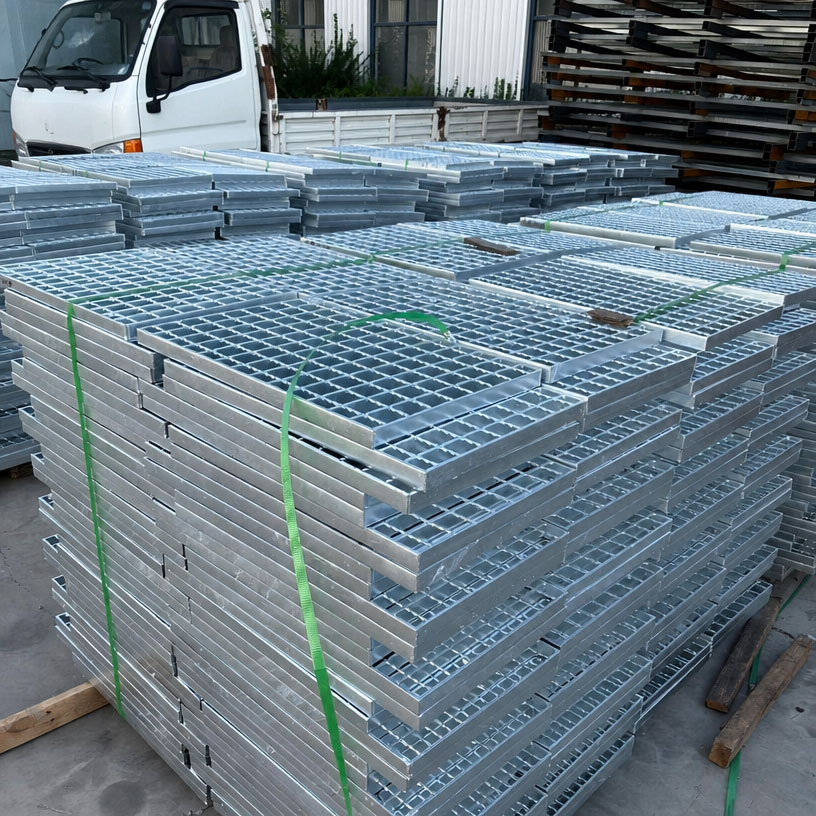
The steel grating is formed by orthogonal combination of bearing flat steel and Fried Dough Twists steel (twisted square steel) cross bar, and is wrapped around. According to the forming process, it can be divided into three types: pressure welding, pressure locking, and plugging; Divided by purpose into platform boards, trench cover boards, and stair treads. Carrying flat steel ranging from 25 3 to 75 8mm, with optional materials including Q235, Q345, ASTM A1011, SS400, and stainless steel;
Send Inquiry
Description

12 PRODUCT RANGES

Covering eight application scenarios
To meet your various needs.

Contact Us

Product details

Product Overview: Steel Grating

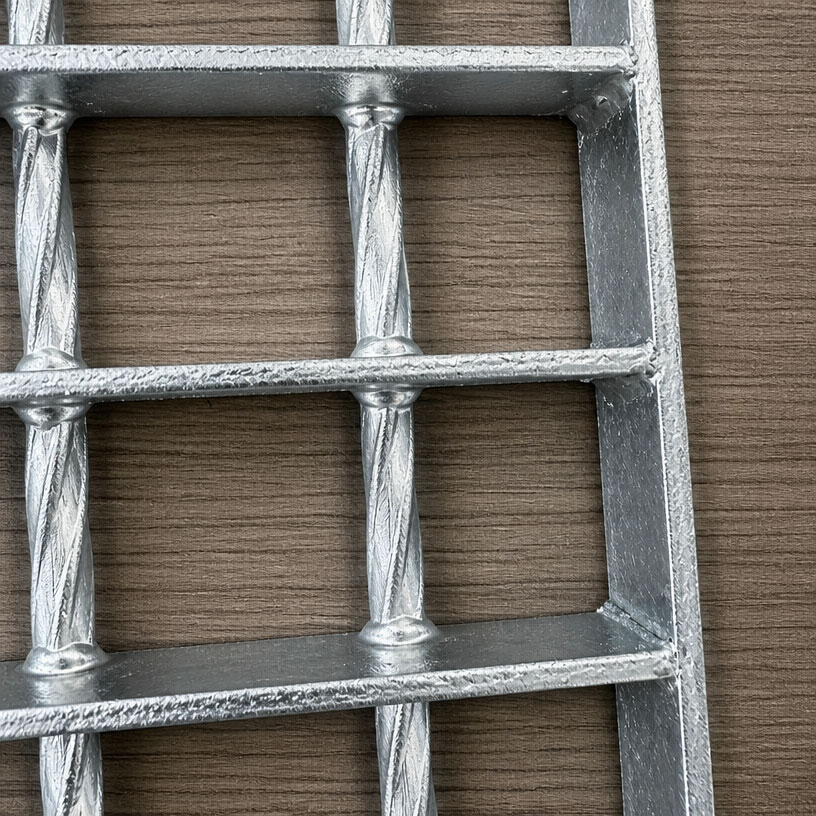
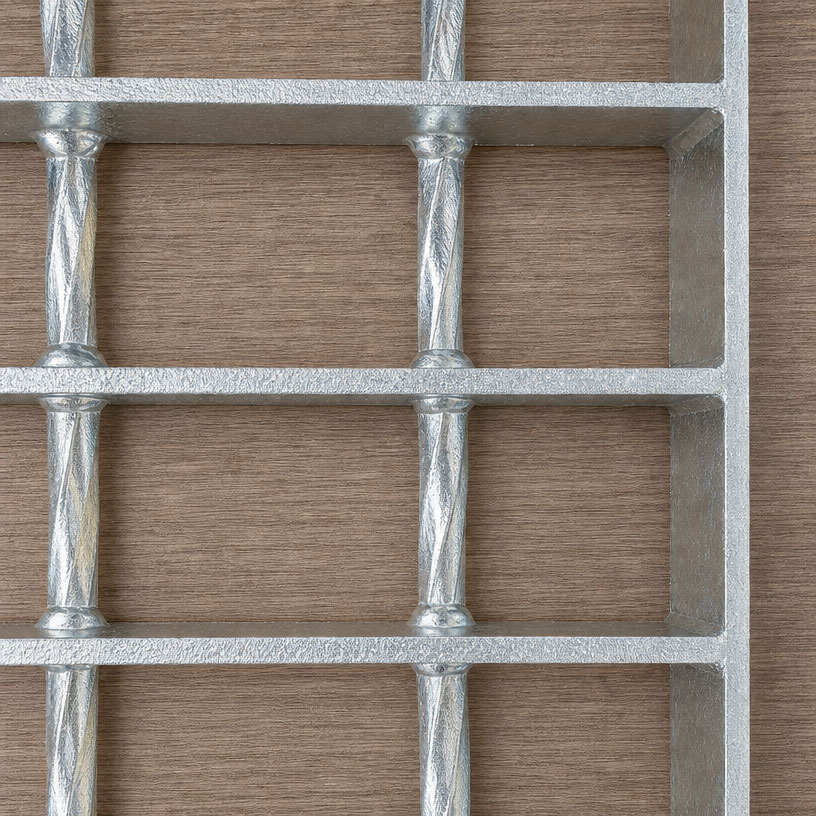
The structure can be described in six letters: A bearing bar, B bearing bar pitch, C bearing bar thickness, D bearing bar depth, E cross bar pitch, F edge banding. Every calculation rests on A, C and D - depth governs bending, thickness governs shear and local bearing, pitch decides how many bars share the load. A request for a plate thickness alone can therefore not be turned into a selection: span and load must come first. The cross bar is the twisted square bar, formed by twisting a square section into a helix and welding or locking it across the bearing bars; its job is to hold the bar pitch, transfer lateral force and keep the opening underfoot to a safe size.

There are three forming processes, and this is where steel grating is most often confused and where quotations diverge. Press-welded grating resistance-welds bearing bars and twisted bars in one pass, fusing every intersection into one body: highest strength and stiffness, the mainstream for platforms and heavy duty. Press-locked grating slots the bearing bars and presses the cross bars into the slots, held by the toothed profile without welding: no heat-affected zone, a flat weld-free surface, suited to stainless and clean environments. Interlocked grating drills the bearing bars and threads the cross bars through, then spot-welds or rivets the ends: high positional accuracy and low assembly stress, used for irregular panels and for access covers that must be dismantled. Strength ranks press-welded first, press-locked and interlocked after; appearance ranks the other way round.

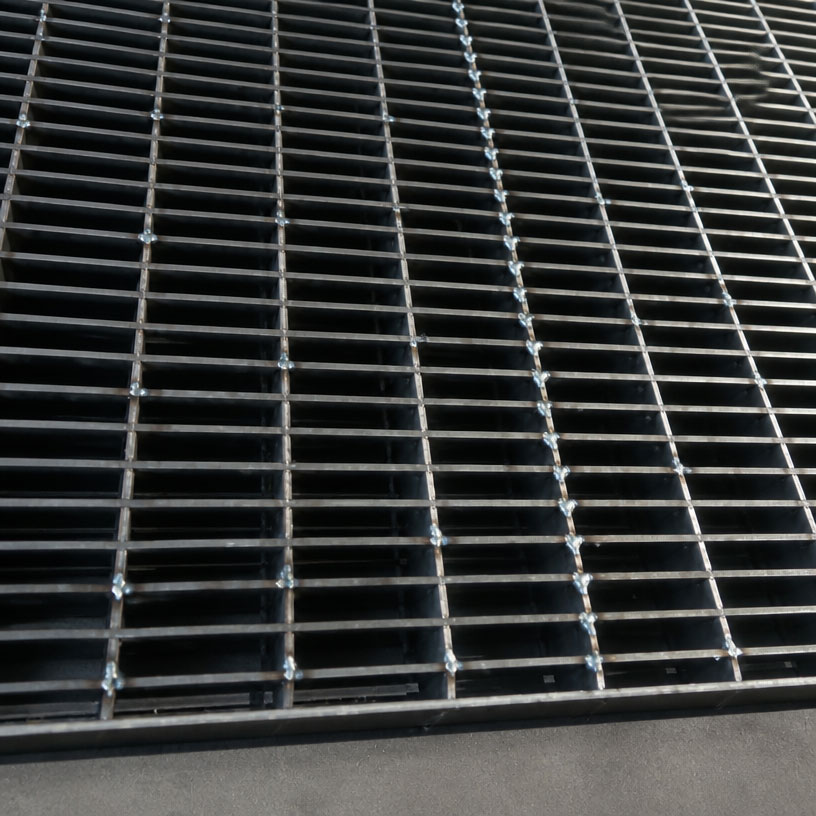
Easier to overlook than the choice of process is the welding method. A press welder produces fully fused welds of consistent size and spacing. Part of the low-price market instead welds by hand: the operator tack-welds point by point, which is cheap and fast, but welds vary in size, are sometimes offset, and often stop short of a full-length weld to save time. This is invisible on dispatch and impossible to hide after galvanizing - where a weld is starved or not fused, zinc will not take, leaving bare patches, rough surfaces or zinc build-up, and those same points are the first to crack once the grating carries load. Half the quality difference in steel grating is in the bar size, the other half is in the welds.

Surface treatment decides service life. Carbon steel grating is almost always hot-dip galvanized, with zinc covering both faces and the cut edges - the standard for outdoor and wet conditions. Stainless grating is not galvanized; it is supplied natural or electropolished for food, pharmaceutical, chemical and coastal use. Bare steel with paint is only sensible indoors and dry, and cut edges and welds remain its weak points.

Three Forming Processes Compared:

ItemPress-weldedPress-lockedInterlocked
FormingBearing and cross bars resistance-welded in one passBearing bars slotted, cross bars pressed in and held by toothed profileBearing bars drilled, cross bars threaded through, ends spot-welded or riveted
JointMetallurgical, rigidMechanical interlock, semi-rigidMechanical location, demountable
StrengthHighest; heavy platforms and long spansMedium; shear and fatigue below weldedMedium; depends on end fixing
AppearanceUniform press marks at intersectionsFlat, no weld marks, neatestVisible drilled holes in the bar
Material fitMainly carbon steelStainless, aluminium, clean roomsIrregular panels and demountable access
Typical usePlatforms, walkways, trench covers, heavy equipmentFood and pharma clean areas, ceilings, decorative grillesMaintenance platforms, temporary platforms, irregular covers

Welding Method: Machine Full Weld versus Manual Welding:

ItemMachine press weld (full weld)Manual welding
MethodResistance press welder, every intersection fusedOperator welds point by point by hand
Weld qualityFull, fused, consistent size and spacingVarying size, occasional offset, undercut and lack of fusion
ContinuityFull weld at every pointOften intermittent to save time, not full length
AppearanceRegular press marks, even surface after galvanizingUneven weld beads; zinc build-up, bare patches or colour variation after galvanizing
Strength and fatigueActs as one body; best shear and fatigue performanceThe weld is the weak point and cracks first under repeated load
CostHigher (equipment and labour)Lower - the main cost reduction in cheap product
Suitable forPlatforms, walkways, trench covers, load-bearing and visible areasNon-load-bearing decorative items, short-term temporary works

Note: machine full-weld can be specified on request, with the process and acceptance criteria agreed in the order technical annex. Where manual welding is supplied, the full-weld requirement and the weld inspection method should be agreed at the same time.

Specifications and Parameters:

MaterialBearing bar (depth x thickness)Twisted square cross bar
Q23525x3, 25x5, 30x3, 30x5 mm5 mm
Q34532x3, 32x5, 35x5, 40x3, 40x5 mm5 - 6 mm
ASTM A34540x5, 50x5 mm5 - 6 mm
ASTM A101160x5, 60x8, 70x8 mm6 - 8 mm
SS40075x5, 75x8 mm6 - 8 mm
ItemSpecification
Bearing bar pitchCommonly 20, 22, 27, 30, 31, 32, 34, 40 mm, selected by design
Cross bar pitch50 mm or 100 mm
Cross bar typeTwisted square bar as standard; round or flat bar in special locations, to be confirmed
Edge bandingEdge bar around the perimeter, equal to or shallower than the bearing bar; openings and irregular shapes cut to drawing
Panel sizeMade to layout drawing; split into blocks for transport or lifting limits
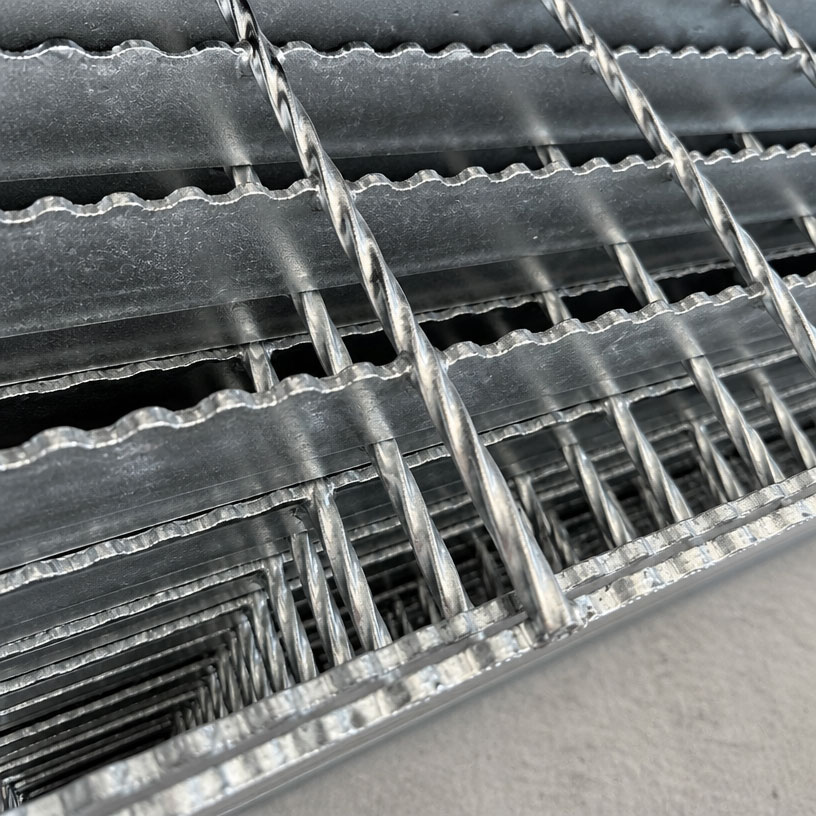
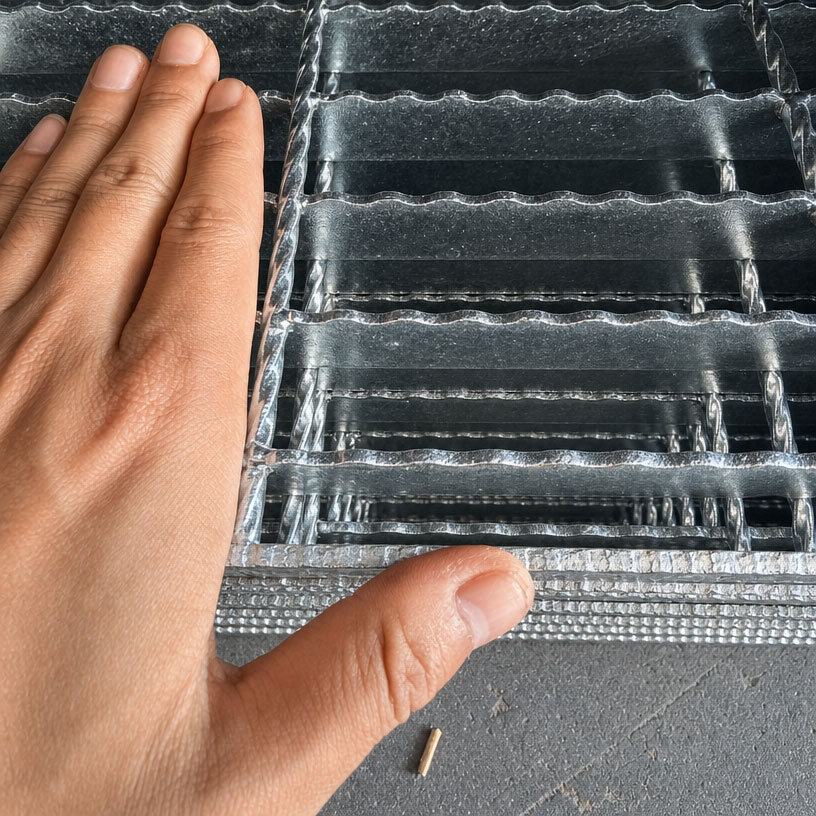
Anti-slipSerrated bearing bar optional for wet, oily or ramped locations
Surface treatmentHot-dip galvanized (standard carbon steel), painted bare steel (dry indoor), stainless natural or electropolished
NoteGrade, bar size, forming process and weld requirements are confirmed in the order technical annex and mill certificates

Three Product Forms (Platform, Trench Cover, Stair Tread):

FormStructure and Key PointsCommon Size
Platform panelFlat panel with edge banding; bar depth set by beam span; kick plate and toe board optionalLayout to drawing, bearing bar pitch around 30 mm
Trench coverMade to trench width and load, hinged or liftable; banded edges and lifting handlesWidth to trench, length per section, sized for manual lifting
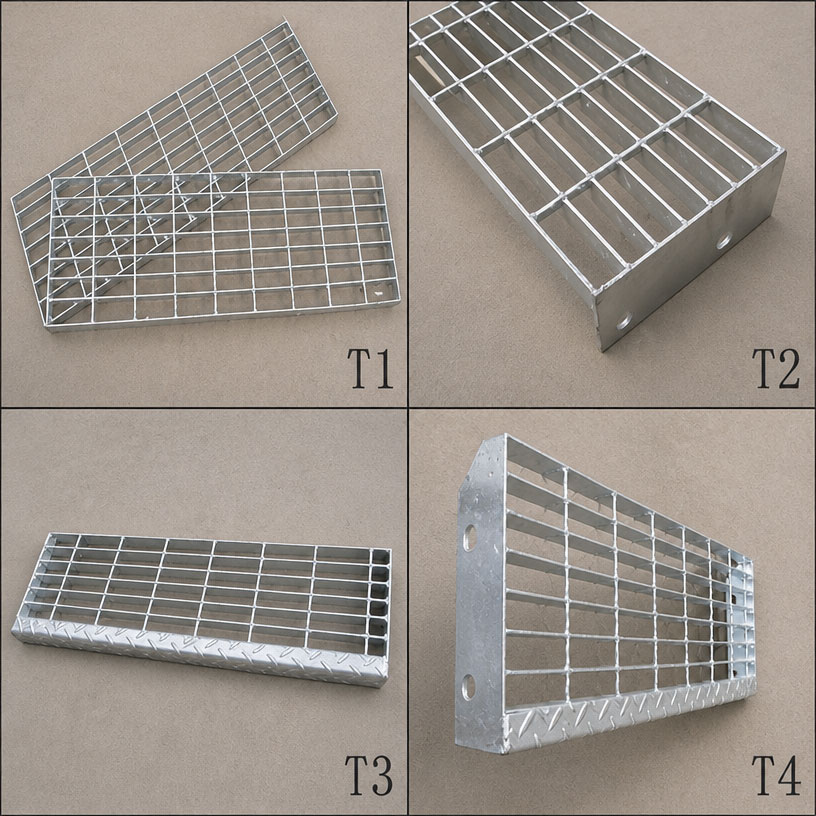
Stair treadNosing plate (checkered or folded) at the leading edge for anti-slip and kick protection; serrated bar optional; side plates and cleatsTread width 230 / 250 / 300 mm, length to stair width

Product Features:

  • ● Calculable capacity: bar depth, thickness and pitch define capacity, so the section is calculated from span and load.
  • ● Verifiable welds: machine full welds are full, even and evenly pitched, and stay flat after galvanizing; offset, unfused or intermittent manual welds are visible before and after coating.
  • ● Ventilated and free draining: high open area, no standing water, snow or dust - suited to outdoor platforms and drainage covers.
  • ● Anti-slip: serrated bearing bar gives markedly better grip than plain plate when wet, oily or on a slope.
  • ● Light but strong: at equal capacity it weighs far less than checkered plate, reducing dead load.
  • ● Easy to install and replace: supplied in blocks, bolted or welded on site, single blocks replaceable.

Application Scenarios:

  • ● Industrial platforms and walkways: maintenance platforms, equipment access, pipe rack crossings.
  • ● Trench covers and drainage: plant trenches, municipal covers, pump station and treatment tank covers.
  • ● Stair treads: industrial stair treads and ladder treads with nosing plate and serrated finish.
  • ● Ceilings and decoration: factory ceiling grilles, facade grilles, equipment screening.
  • ● Workshops and warehousing: rack shelves, pallet supports, forklift aisle covers.
  • ● Food and pharmaceutical: press-locked stainless grating for clean-area trench covers.
  • ● Municipal and landscape: tree pit covers, bridge maintenance walkways, culvert covers.

Frequently Asked Questions:

Q: Press-welded, press-locked or interlocked?
A: Material first, load second, dismantling third. Carbon steel heavy platforms, walkways and trench covers take press-welded, because the fused joint gives the best shear and fatigue behaviour. Stainless, clean areas and visible decorative work take press-locked, for the flat weld-free surface. Irregular panels and access covers that must be removed take interlocked. On a long-span heavy platform, press-locked and interlocked fail in shear first, so raise the bar depth or return to press-welded.
Q: What is the twisted square bar, and why not round bar?
A: The twisted square bar is the standard cross bar, formed by twisting a 5, 6 or 8 mm square section into a helix and fixing it across the bearing bars. Compared with round bar it resists lateral force better, presents a larger contact face to the bearing bar for a stronger weld or lock, and the helix adds a little grip. Round bar is used only in special locations where a smoother or more open surface is needed, and must be confirmed case by case.
Q: How can I tell machine welding from manual welding?
A: Three checks. First, are the welds full, even and evenly spaced - machine welds show consistent press marks in a regular rhythm, manual welds differ point to point. Second, is the weld continuous - hand welding often strikes and moves on, leaving a gap between bearing bar and cross bar visible from the side. Third, look at the surface after galvanizing - starved or unfused points do not take zinc, showing bare patches, dark spots or zinc nodules. A torch held at a low angle exposes all three.
Q: Manual welding is cheaper - why avoid it?
A: What is saved is labour; what is paid later is rework. Manual welds vary in size, suffer undercut and lack of fusion, look rough and uneven after galvanizing, and are the first points to crack under repeated load from people, forklifts or machine vibration - and repair means replacing the whole block. For platforms, walkways and covers, specify machine full weld; manual welding belongs to non-load-bearing decorative items and short-term temporary works.
Q: What is the risk of not welding full length?
A: Three risks. Strength: intermittent welding gives far less effective load path than the design assumes, so a capacity calculated for full welds cannot be applied. Corrosion: gaps trap water and dirt, and zinc cannot reach inside during dipping, so the gap becomes the starting point of rust. And the defect is invisible once installed, surfacing only in service. If manual welding must be accepted, put the full-weld requirement and the inspection method in the technical annex.
Q: How do I specify stair treads?
A: Three parameters. Tread width - commonly 230, 250 or 300 mm, with 250 mm typical for industrial stairs. Nosing - a checkered or folded plate at the leading edge, protecting the edge and preventing the toe from catching. Anti-slip - serrated bearing bars for wet, oily or outdoor stairs. Side plates and cleats follow the stringer detail; a stair drawing is the fastest route.
Q: Can you quote from a bar size alone?
A: The size can be quoted, the type cannot be selected. Capacity depends on bar depth, thickness, pitch and span together; the same 30x3 bar carries several times more over 600 mm than over 1200 mm. Send the span, the distributed or point load, and the environment.
Q: Can panels be cut, notched or made irregular?
A: Yes. Openings for pipes, columns and inspection hatches are cut to drawing, and irregular shapes can be fabricated. Openings need edge banding or reinforcing bars, otherwise local capacity is reduced.
Product Inquiry
Company profile

Company profile

View more+
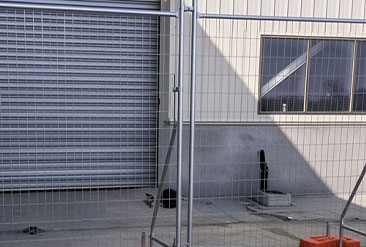
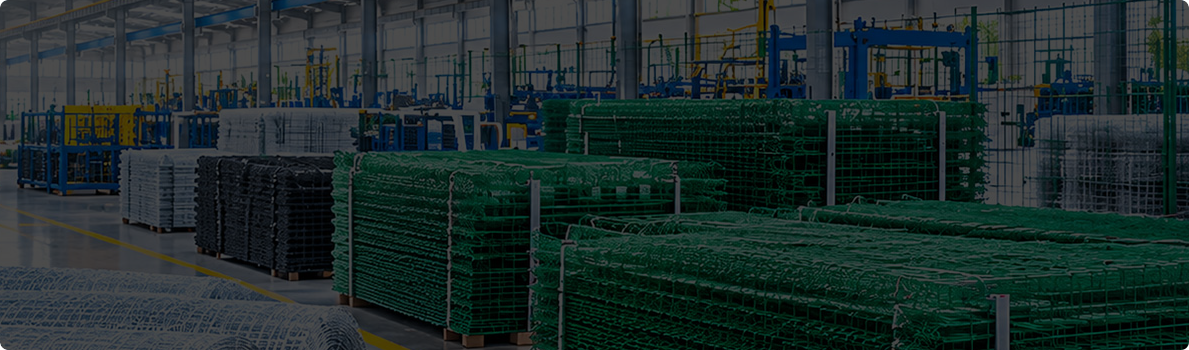
Anping County Kaiyao Wire Mesh Products Co., Ltd. makes fencing and wire mesh in Anping, Hebei. Sixteen product lines serve eight kinds of site: construction, residential, industrial and warehouse, high-security, highway and railway, farm and ranch, riverbank and slope, and municipal road.We do not stack standard panels in a warehouse and wait for someone to pick. Customers give us the site condit...
Our advantages
1
18 years of export experience
Our products have been exported to customers in Northern Europe, North America, Western Europe, Eastern Europe, and other markets.
2
Quality Certification
Our products have been exported to customers in Northern Europe, North America, Western Europe, Eastern Europe, and other markets.
3
OEM/ODM support
Our products have been exported to customers in Northern Europe, North America, Western Europe, Eastern Europe, and other markets.
4
Quality Certification
我们的产品已出口至北欧、北美、西欧、东欧等市场的客户。
5
OEM/ODM support
Our products have been exported to customers in Northern Europe, North America, Western Europe, Eastern Europe, and other markets.
6
Quality Certification
Our products have been exported to customers in Northern Europe, North America, Western Europe, Eastern Europe, and other markets.
Packaging Logistics
Packaging Logistics
Packaging and transportation are very important links in the export process. Our quality inspection department checks every part before packing. For LCL, we use fumigation-free plywood boxes and wrap plastic film inside to pack industrial vegetable washers. For FCL, large fruit washers and fruit and vegetable washing production lines are directly loaded into containers and wrapped in plastic film to prevent moisture from entering and ensure transportation safety.
  • air freight
  • sea freight
  • Trucking
We use cookie to improve your online experience. By continuing to browse this website, you agree to our use of cookie.

Cookies

Please read our Terms and Conditions and this Policy before accessing or using our Services. If you cannot agree with this Policy or the Terms and Conditions, please do not access or use our Services. If you are located in a jurisdiction outside the European Economic Area, by using our Services, you accept the Terms and Conditions and accept our privacy practices described in this Policy.
We may modify this Policy at any time, without prior notice, and changes may apply to any Personal Information we already hold about you, as well as any new Personal Information collected after the Policy is modified. If we make changes, we will notify you by revising the date at the top of this Policy. We will provide you with advanced notice if we make any material changes to how we collect, use or disclose your Personal Information that impact your rights under this Policy. If you are located in a jurisdiction other than the European Economic Area, the United Kingdom or Switzerland (collectively “European Countries”), your continued access or use of our Services after receiving the notice of changes, constitutes your acknowledgement that you accept the updated Policy. In addition, we may provide you with real time disclosures or additional information about the Personal Information handling practices of specific parts of our Services. Such notices may supplement this Policy or provide you with additional choices about how we process your Personal Information.


Cookies

Cookies are small text files stored on your device when you access most Websites on the internet or open certain emails. Among other things, Cookies allow a Website to recognize your device and remember if you've been to the Website before. Examples of information collected by Cookies include your browser type and the address of the Website from which you arrived at our Website as well as IP address and clickstream behavior (that is the pages you view and the links you click).We use the term cookie to refer to Cookies and technologies that perform a similar function to Cookies (e.g., tags, pixels, web beacons, etc.). Cookies can be read by the originating Website on each subsequent visit and by any other Website that recognizes the cookie. The Website uses Cookies in order to make the Website easier to use, to support a better user experience, including the provision of information and functionality to you, as well as to provide us with information about how the Website is used so that we can make sure it is as up to date, relevant, and error free as we can. Cookies on the Website We use Cookies to personalize your experience when you visit the Site, uniquely identify your computer for security purposes, and enable us and our third-party service providers to serve ads on our behalf across the internet.

We classify Cookies in the following categories:
 ●  Strictly Necessary Cookies
 ●  Performance Cookies
 ●  Functional Cookies
 ●  Targeting Cookies


Cookie List
A cookie is a small piece of data (text file) that a website – when visited by a user – asks your browser to store on your device in order to remember information about you, such as your language preference or login information. Those cookies are set by us and called first-party cookies. We also use third-party cookies – which are cookies from a domain different than the domain of the website you are visiting – for our advertising and marketing efforts. More specifically, we use cookies and other tracking technologies for the following purposes:

Strictly Necessary Cookies
These cookies are necessary for the website to function and cannot be switched off in our systems. They are usually only set in response to actions made by you which amount to a request for services, such as setting your privacy preferences, logging in or filling in forms. You can set your browser to block or alert you about these cookies, but some parts of the site will not then work. These cookies do not store any personally identifiable information.

Functional Cookies
These cookies enable the website to provide enhanced functionality and personalisation. They may be set by us or by third party providers whose services we have added to our pages. If you do not allow these cookies then some or all of these services may not function properly.

Performance Cookies
These cookies allow us to count visits and traffic sources so we can measure and improve the performance of our site. They help us to know which pages are the most and least popular and see how visitors move around the site. All information these cookies collect is aggregated and therefore anonymous. If you do not allow these cookies we will not know when you have visited our site, and will not be able to monitor its performance.

Targeting Cookies
These cookies may be set through our site by our advertising partners. They may be used by those companies to build a profile of your interests and show you relevant adverts on other sites. They do not store directly personal information, but are based on uniquely identifying your browser and internet device. If you do not allow these cookies, you will experience less targeted advertising.

How To Turn Off Cookies
You can choose to restrict or block Cookies through your browser settings at any time. Please note that certain Cookies may be set as soon as you visit the Website, but you can remove them using your browser settings. However, please be aware that restricting or blocking Cookies set on the Website may impact the functionality or performance of the Website or prevent you from using certain services provided through the Website. It will also affect our ability to update the Website to cater for user preferences and improve performance. Cookies within Mobile Applications

We only use Strictly Necessary Cookies on our mobile applications. These Cookies are critical to the functionality of our applications, so if you block or delete these Cookies you may not be able to use the application. These Cookies are not shared with any other application on your mobile device. We never use the Cookies from the mobile application to store personal information about you.

If you have questions or concerns regarding any information in this Privacy Policy, please contact us by email at . You can also contact us via our customer service at our Site.