
Double Wire Fence

Double Wire Fence

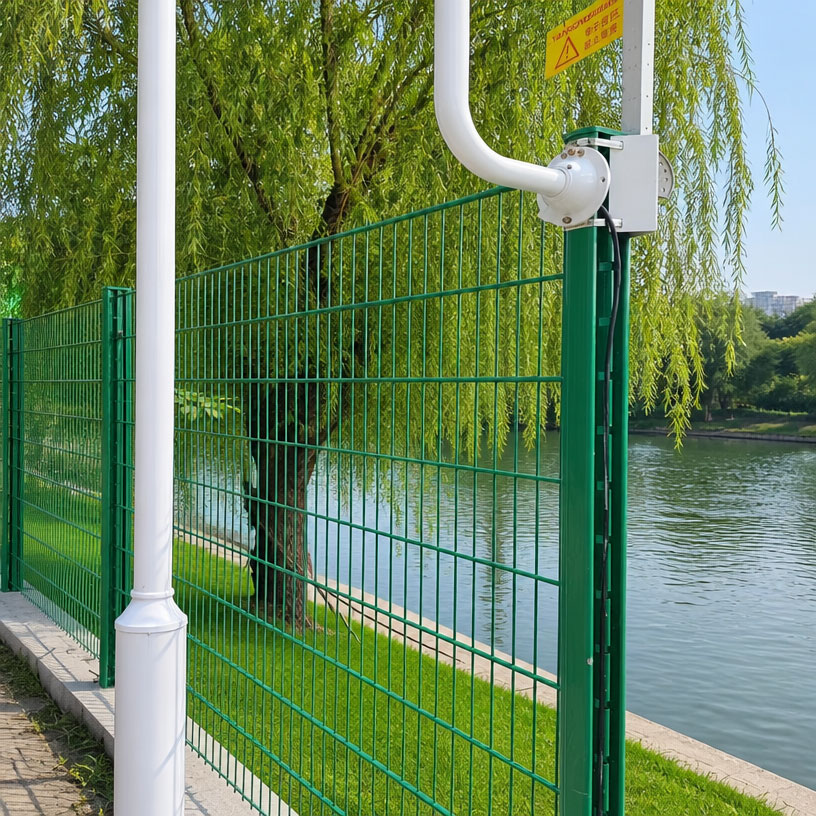
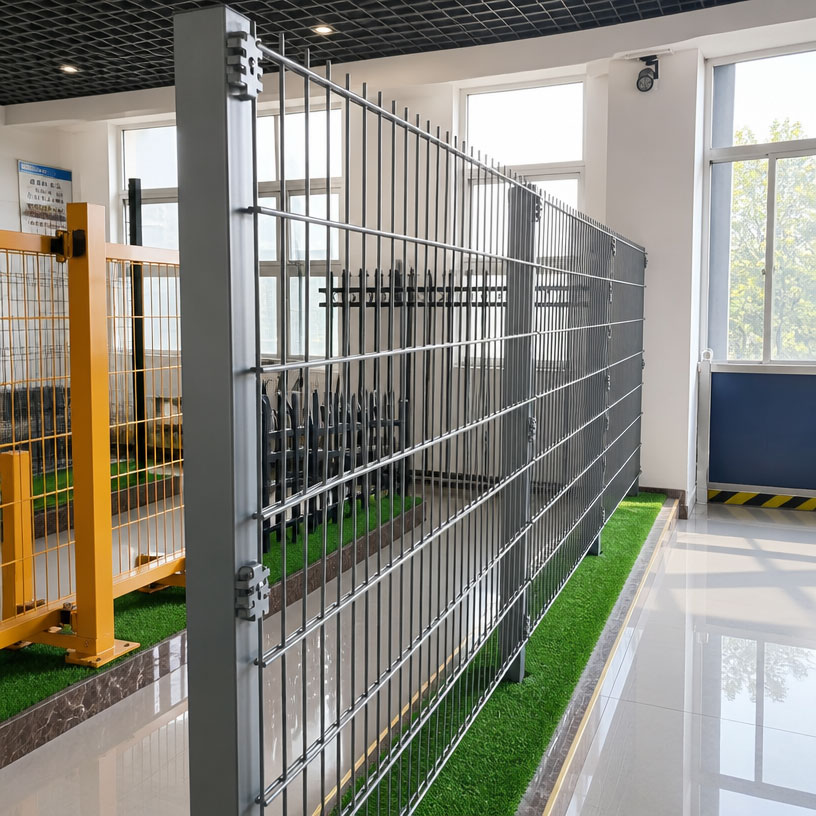
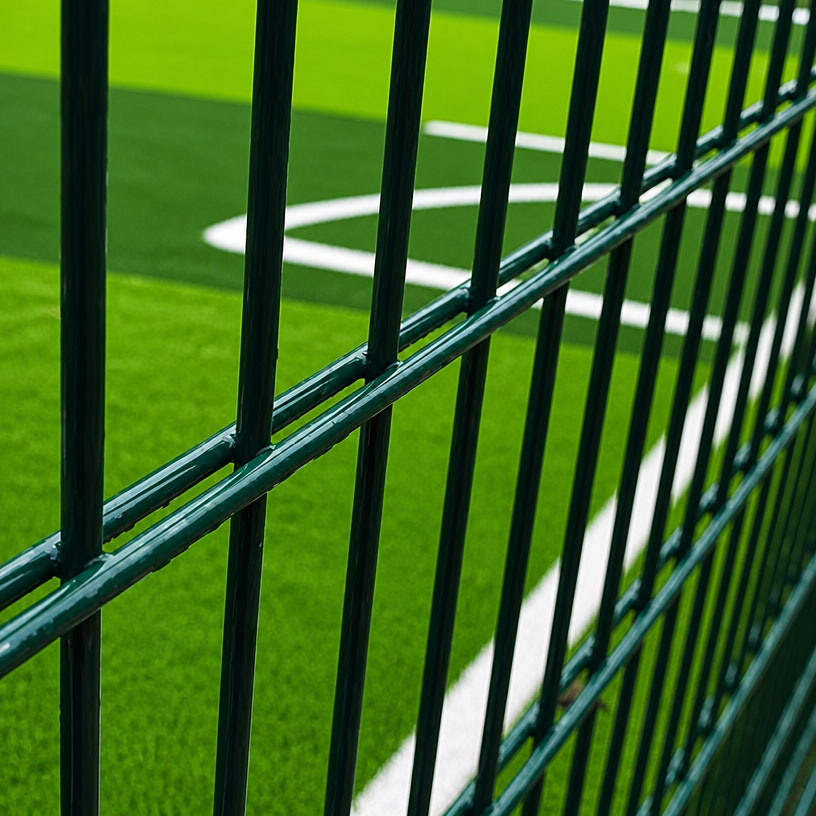
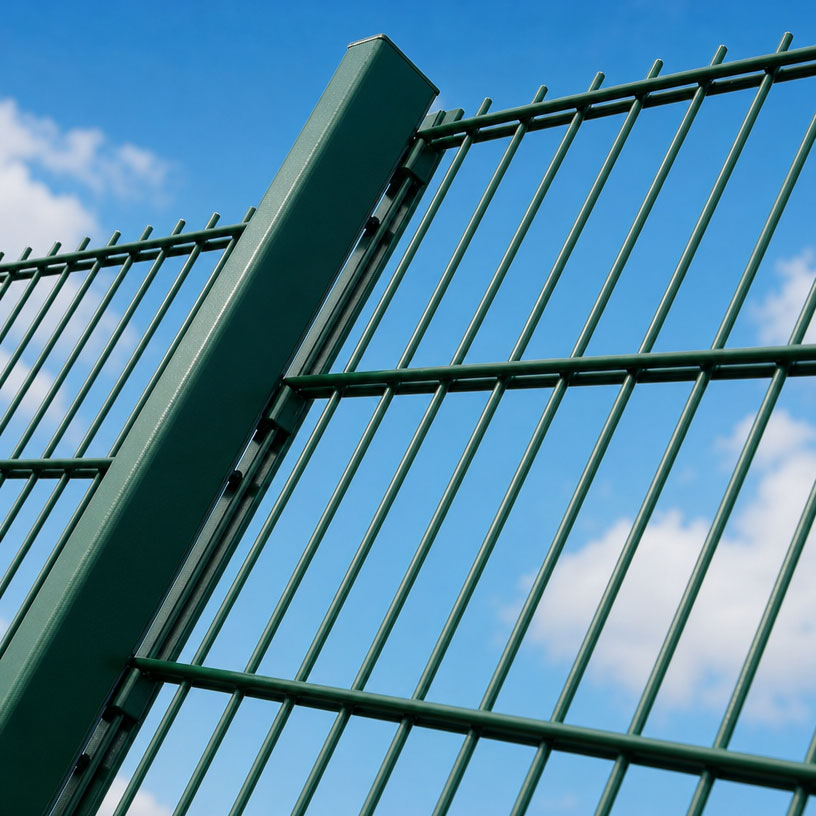
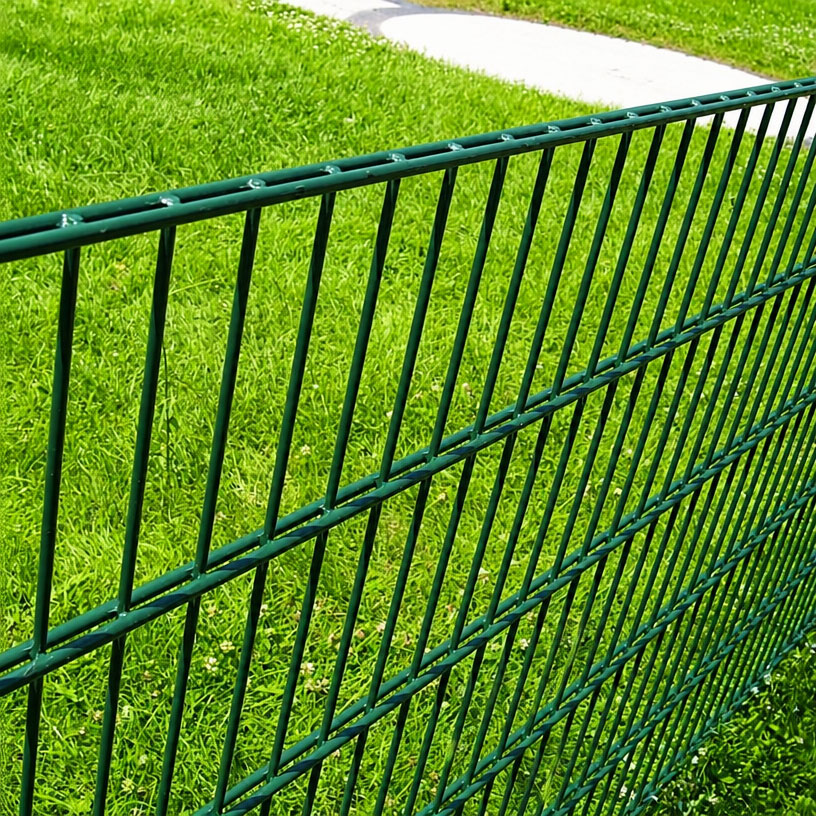
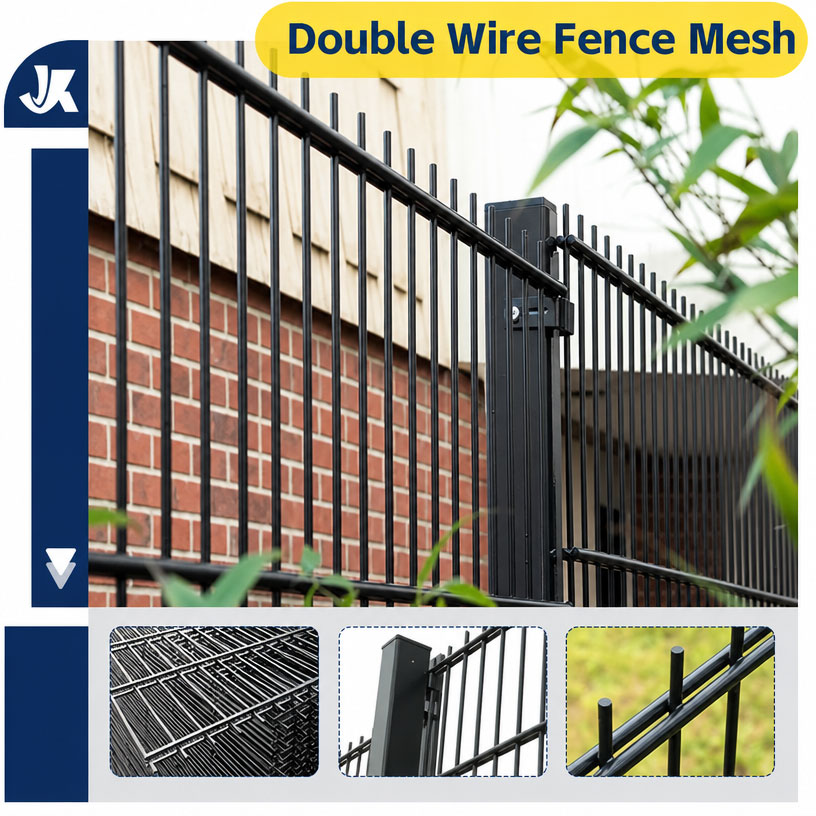
The double wire fence clamps vertical steel wires in pairs from both sides with two thick horizontal wires, forming clamping points at each intersection. A double horizontal wire frame is formed above and below, with a single wire forming the mesh surface in the middle. The clamping structure makes the mesh stable like a shallow truss, with sufficient rigidity without the need to weld a square tube frame. The mesh surface is flat, impact resistant, and visually transparent. Height of 1.53-2.43m,
Send Inquiry
Description

12 PRODUCT RANGES

Covering eight application scenarios
To meet your various needs.

Contact Us

Product details

Product Overview: Double Wire Fence

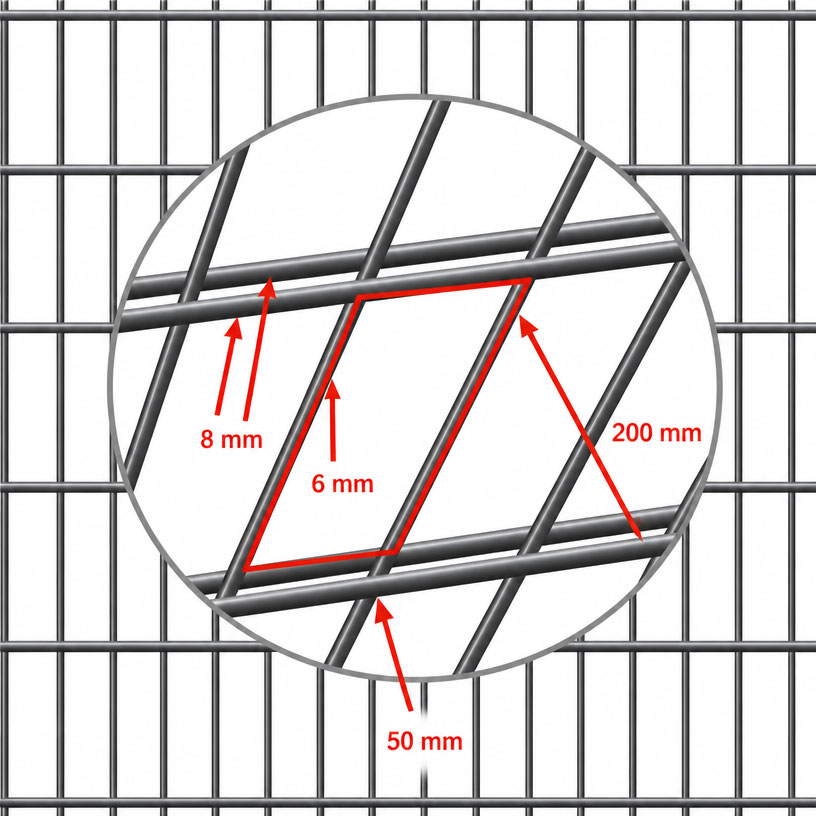
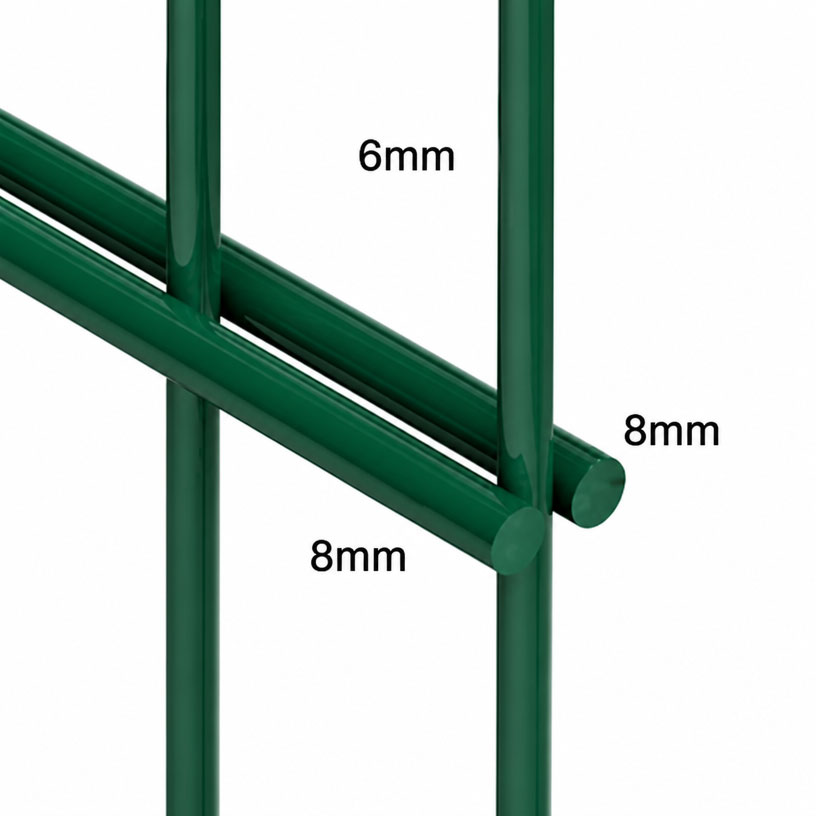
The structure is visible at a glance: on each vertical wire the horizontal wires are clamped in pairs from both sides, so every intersection forms two gripping points; the top and bottom of the panel each carry a pair of heavy horizontal wires while the middle is a single-wire grid. The paired runs are what the trade calls double clamp wire: the two wires bite on either side of the vertical and are welded to lock them, giving the panel a shallow-truss stability and replacing the square tube frame a plain panel would need. Wire combinations 6/5/6 and 8/6/8 are known in the trade as type 656 and type 868, so the type number alone can place an order.

That brings three direct benefits. Stiffness first: clamping the pairs changes the load path from a single weld point to two gripping points, so the panel acts as a shallow truss with far higher bending stiffness than single-wire mesh; it stands without sagging and resists inward deflection, which removes the need for an external frame and saves both a process step and material. Impact resistance second: when a vehicle or livestock strikes, load travels along the paired wires into the posts, the grid carries less, and deformation stays local and repairable; even if one point fails, the other wire still grips the vertical and the panel does not peel open. Appearance third: the paired wires read as two crisp horizontal lines on a flat face, closer to a guard rail than to plain mesh, which is why residential and municipal projects favour it.

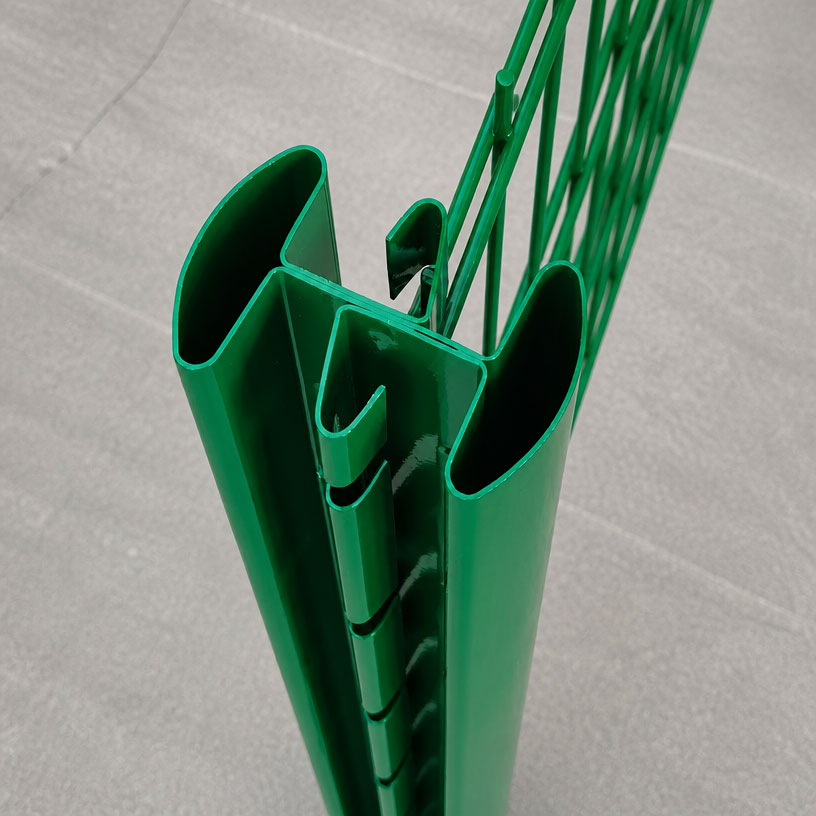
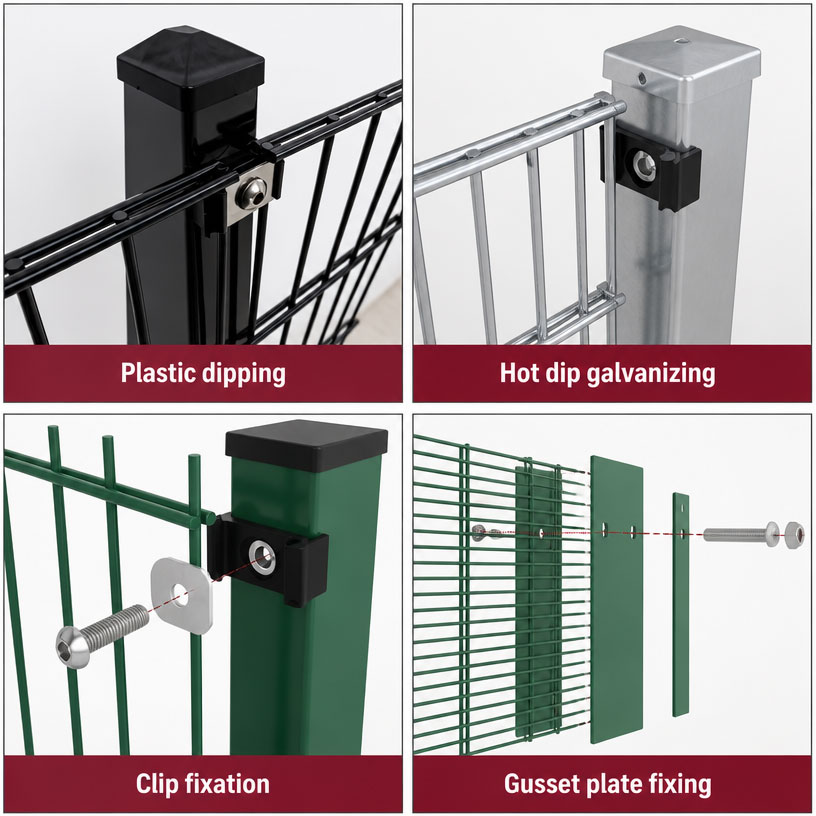
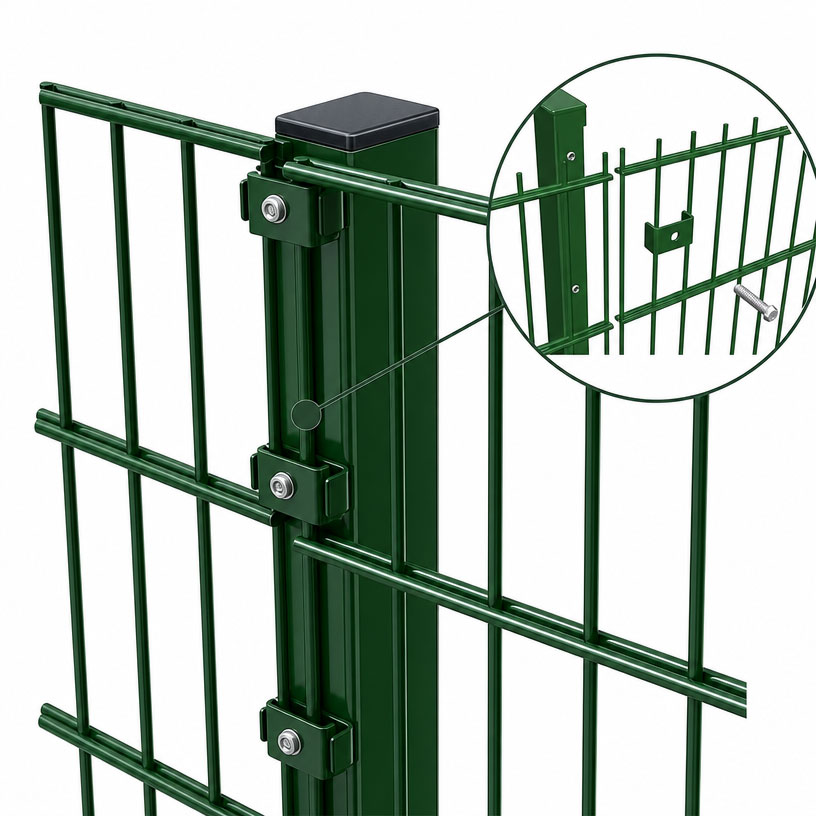
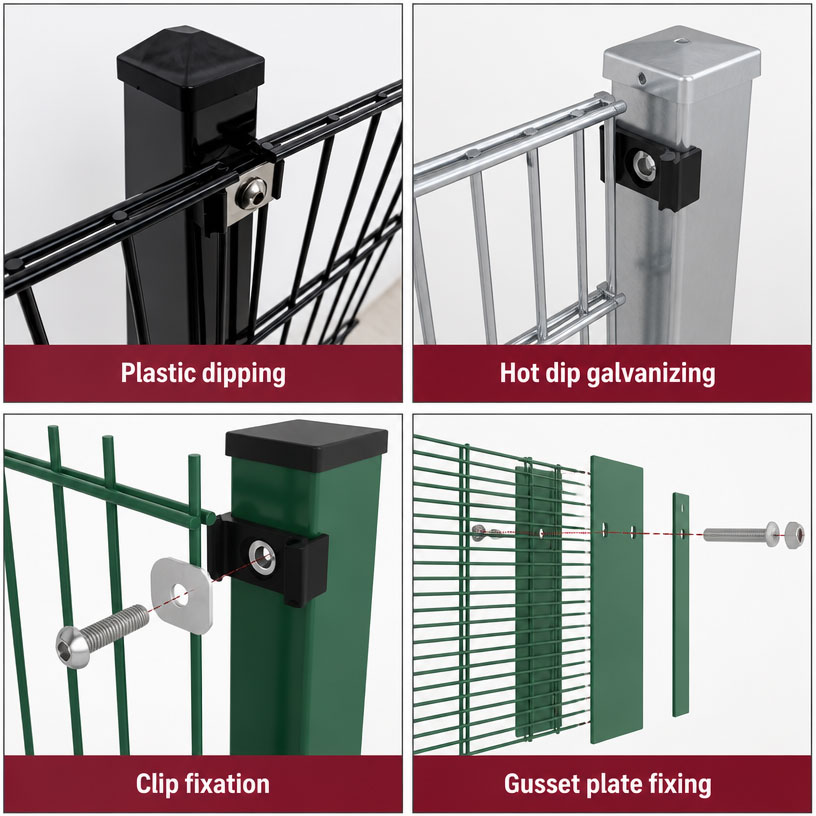
The designation 6/5/6 means 6 mm paired wires top and bottom with 5 mm single wire between; 8/6/8 means 8 mm paired and 6 mm intermediate, for taller panels and higher impact duty. Posts come as round tube, square tube and rectangular tube in 1.2, 1.5 and 2.0 mm wall, with panels fixed by clips and anti-theft bolts. There are three finishes: hot-dip galvanized, hot-dip plus powder coating, and hot-dip plus PVC dipping, in grass green, dark green and black as standard.

Specifications and Parameters (Double Wire Fence):

ItemSpecification
Height1.53 / 1.83 / 2.03 / 2.23 / 2.43 m (other heights on request)
Width2.0 / 2.5 / 3.0 m
Wire diameter (double clamp)6/5/6 mm (type 656: 6 mm paired, 5 mm intermediate); 8/6/8 mm (type 868: 8 mm paired, 6 mm intermediate)
Mesh opening50x100 / 50x150 / 50x200 / 55x200 / 75x100 mm
Round tube postØ48 x 1.2 / 1.5 / 2.0 mm; Ø60 x 1.2 / 1.5 / 2.0 mm
Square tube post50x50 / 60x60 / 80x80 mm x 1.2 / 1.5 / 2.0 mm
Rectangular post40x60 / 60x80 mm x 1.2 / 1.5 / 2.0 mm
Surface finishHot-dip galvanized / hot-dip + powder coated / hot-dip + PVC dipped (three options, see below)
ColourGrass green / dark green / black; other colours on request
ConnectionPanel-to-post clip fixing with anti-theft bolts; post cap on top
NoteThe above is the standard range. Height, width, wire diameter, mesh opening and post specification are all made to order; dimensions and weights are subject to confirmation.

Two Wire Combinations (Type 656 and Type 868):

ItemType 656 (6/5/6)Type 868 (8/6/8)
Paired wires6 mm x 28 mm x 2
Intermediate wire5 mm6 mm
Height fit1.53 / 1.83 / 2.03 m standard runs2.03 m and above, long spans
Stiffness and impactAdequate for standard perimeter and municipal separationClearly higher, for vehicle and livestock impact
Post matchingØ48, 50x50, 40x60 sufficientØ60, 60x60, 60x80 at 2.0 mm wall recommended
CostLower, first choice for standard projectsHigher, for high-risk or tall panels
Typical useResidential, parks, schools, gardensStreet-side, arterial roads, factory perimeters, livestock

Double Clamp Panel versus Plain Single Wire Welded Panel:

ItemDouble clamp panelPlain single wire welded panel
Horizontal structureA pair of heavy wires top and bottom, single wire betweenSame wire diameter throughout
Load pathTwo gripping points, acting as a shallow trussSingle welded point, load carried point by point
Bending stiffnessHigh; stands without sagging and resists inward deflectionLow; sags over long spans and needs closer posts or a frame
Frame neededNo; the paired wires are the frameUsually needs a welded square tube frame for stiffness
ImpactLoad spreads along the paired wires, local and repairableWelds tend to open, with risk of losing the whole panel
AppearanceTwo crisp horizontal lines, reads as a guard railThin face, reads as plain mesh
CostHigherLower

Surface Finish (three options):

FinishDescriptionBest for
Hot-dip galvanizedPanels and posts hot-dip galvanized as a whole: thick coating alloy-bonded to the base metal, sacrificial protection, longest service life. Grey-silver with spangle, no colour.Coastal, high-humidity and industrial atmospheres; projects needing protection without colour
Hot-dip + powder coatedHot-dip zinc base followed by electrostatic powder coating cured in an oven. Zinc protects, the coat provides colour and weather resistance, evenly applied and saturated in tone.Municipal, residential, park and school projects; grass green and dark green dominate
Hot-dip + PVC dippedHot-dip zinc base, then pre-heated and dipped in PVC plastisol for a thicker skin that wraps edges and weld points, with a smooth feel and good abrasion resistance.Sites with impact risk nearby, higher touch requirements or heavier corrosion; school perimeters, street-side footpaths, damp locations

Post Selection:

Post typeSize (wall 1.2 / 1.5 / 2.0 mm)Character and use
Round tubeØ48, Ø60Economical and versatile; Ø48 with 1.53-1.83 m panels, Ø60 above 2 m
Square tube50x50, 60x60, 80x80Defined bending direction and a tidy look; common in municipal and residential work, 80x80 for tall panels and high wind
Rectangular tube40x60, 60x80Narrow face to the view, wide face in bending; used for wall-top conversions and tight space

Selection rule: taller panels, wider post spacing and higher wind load all push the section and wall thickness up. Where barbed wire arms are fitted or vehicle impact is expected, take 2.0 mm wall and one size larger. Post length equals panel height plus embedment, with embedment and foundation detail set by local frost depth and soil.

Product Features:

  • ● Built-in frame: the paired top and bottom wires are the frame, so no square tube surround is needed, saving material and process time and shortening delivery.
  • ● High stiffness: paired wires resist bending, so panels stand without sagging, do not dish under load and deform little over long runs.
  • ● Impact resistance: strike loads travel along the paired wires into the posts, the grid deforms locally and is easy to repair, and total failure is unlikely.
  • ● Crisp appearance: two clean horizontal lines on a flat face read as a guard rail rather than plain mesh, suiting sites with appearance requirements.
  • ● Full range: five heights, three widths, five mesh openings, two wire combinations and three post families, covering different wind loads and budgets.
  • ● Three finishes: hot-dip, plus powder coat, plus PVC dip, tiered by environment and colour requirement.

How It Differs from 3D Fence and BRC Fence:

ItemDouble wire fence3D fenceBRC roll-top fence
Stiffness sourcePaired horizontal wires clamping the verticalsHorizontal wires bent into V beamsTop and bottom rolled into a triangular tube
Visual signatureTwo straight heavy horizontal linesCorrugated, folded faceRounded roll top and bottom
ImpactGood; load spreads along the paired wiresGood; the bends absorb energyGood; the rolled edge is rigid
TransparencyHighMedium, the bends block moreHigh
Typical useResidential, municipal, schools, parksFactories, construction, municipal perimeterAirports, substations, high-security perimeter

Application Scenarios:

  • ● Residential estates and villas: estate boundaries and internal division, where green coating sits well with landscaping and lines stay neat.
  • ● Municipal and road works: roadside separation, cycle and pedestrian segregation, underpass enclosure; higher-impact sections favour 8/6/8.
  • ● Parks and plazas: park boundaries and green space enclosure, unobtrusive to views.
  • ● Schools and sports grounds: playground and pitch perimeters, with a flat face and no sharp edges; PVC dipping gives a safer feel.
  • ● Industrial parks and factories: perimeter and storage zoning, combinable with barbed wire arms for higher anti-climb.
  • ● Gardens, orchards and farms: plot division and boundary protection at a lower cost than 3D fence.
  • ● Construction sites: temporary or semi-permanent enclosure, quick to install and reusable.

Installation and Accessories:

Foundations: posts are cast in concrete or set on prepared footings in the usual way; for retrofit and hard-standing sites a base plate with expansion anchors can be used. Footing size, embedment depth and concrete grade follow local frost depth, soil and wind load, and are confirmed at the shop drawing stage.

Panel fixing: the panel is offered to the post face and held with M-clips or panel clips, secured with anti-theft bolts, with a cap on the post top to keep rain out. Typically two fixing levels per panel, with the number set by post type and panel height.

Corners and ends: corner, end and gate posts take one size larger section because they carry the highest moment; gates can be double leaf or sliding, with gate posts on their own footings.

Sloping ground: either stepped installation, where each panel is level and post length increases along the slope, or racked installation, where panels follow the slope. The two differ in post length and clip positions, so the choice must be stated at order.

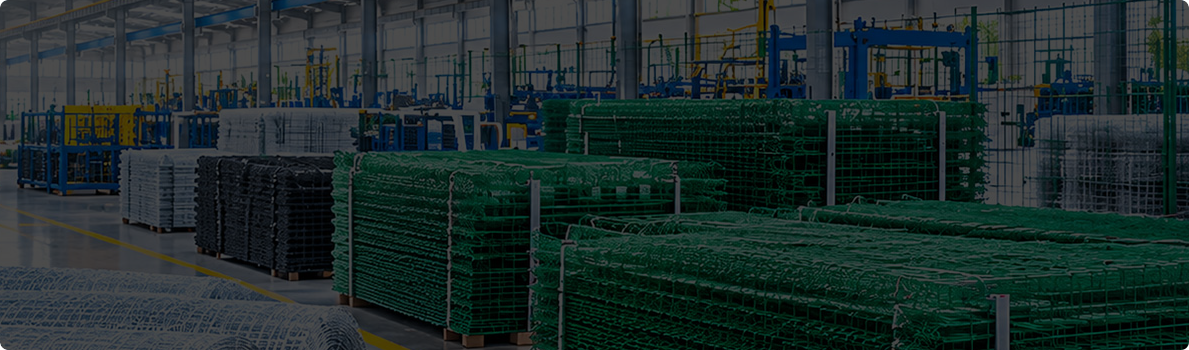
Packing: interleaved paper or film between panels, banded as a stack; posts and accessories bundled separately. Shipped on pallets or loose in the container, with a packing list and loading photographs before dispatch.

Note: minimum order quantity and lead time are set by the specification mix, finish and colour. Made-to-order and standard stock carry different thresholds; please confirm with our sales team.

FAQ:

Q: What exactly does double clamp wire mean, and how does it differ from ordinary double wire mesh?
A: The horizontal wires clamp the verticals in pairs: at every intersection two gripping points form, the paired wires bite on either side of the vertical and are welded to lock them, with single wire between. Two gripping points instead of one weld make the panel behave like a shallow truss, so no square tube surround is welded on and the panel is stiff on its own. Buyers also call it double horizontal wire fence or twin wire mesh; 6/5/6 is type 656 and 8/6/8 is type 868, and the type number is enough to order.
Q: 6/5/6 or 8/6/8?
A: By height and impact duty. Standard heights of 1.53 to 2.03 m are served well by 6/5/6 at lower cost; panels of 2.23 to 2.43 m, street-side or vehicle-exposed sections, and long spans with fewer posts call for 8/6/8, where the heavier paired wires markedly improve bending and impact performance.
Q: How are height and width decided?
A: Standard heights are 1.53, 1.83, 2.03, 2.23 and 2.43 m, standard widths 2, 2.5 and 3 m. Height follows the security level and whether screening is needed; width must match post spacing, since post centres normally equal panel width. Wider panels mean fewer posts and larger single-span deflection, so in high-wind areas take one size narrower or tighten post spacing.
Q: Which posts are available and how to choose?
A: Round tube Ø48 and Ø60, square tube 50x50, 60x60 and 80x80, rectangular tube 40x60 and 60x80, all in 1.2, 1.5 and 2.0 mm wall. Square and rectangular sections have a defined bending direction and a tidier look, common in municipal and residential work; round tube is economical and versatile. For high wind, tall panels or barbed wire mounting, take a larger section with 2.0 mm wall.
Q: Which of the three finishes?
A: Hot-dip for protection only; hot-dip plus powder coating where colour is needed at controlled cost; hot-dip plus PVC dipping for a thicker skin, more complete edge coverage and impact risk nearby. In all three the corrosion base is the zinc layer, and colour exists only in the latter two. Do not economize on zinc in coastal or humid sites.
Q: What colours are available?
A: Grass green, dark green and black as standard, with other colours on request. Colour and finish must match: pure hot-dip galvanizing carries no colour, so a colour requires powder coating or PVC dipping.
Q: How are panels fixed to posts?
A: Panels are clamped to the post with clips (M-clip or panel clip) and secured with anti-theft bolts, and the post top is capped to keep rain out. This is the standard method for double wire fence: it can be dismantled and reused, and a damaged panel is replaced on its own without rebuilding the run.
Q: Double wire fence or 3D fence?
A: It depends on where the stiffness comes from and what the site must look like. Double wire fence gains its stiffness from the paired horizontal wires clamping the verticals: a flat face with two clean horizontal lines, which suits residential, municipal, school and park boundaries where the fence should read as a guard rail. 3D fence gains stiffness from the V bends in the horizontal wires: better energy absorption, more often seen on factory, construction and municipal perimeters. At equal height the double wire type is usually the more economical of the two, because the 3D folding step costs more.
Q: Can barbed wire or anti-climb accessories be added?
A: Yes. Barbed wire arms, single or double Y type, can be fitted to the post tops with barbed wire or razor wire to raise the anti-climb level. The arms add moment and wind load at the post, so take one size larger section with 2.0 mm wall, and set arm spacing to the post spacing.
Q: How are slopes and corners handled?
A: Two methods on slopes: stepped, where each panel stays level and post length steps up along the slope for a tidy line; or racked, where panels follow the slope, saving posts but leaving a non-square junction with the ground. Corners take corner posts, ends take end posts and openings take gate posts, all one size larger. Send the site plan and slope and the post schedule will be matched to it.
Q: Minimum order quantity, and how is it packed?
A: The minimum is set by the specification mix, finish and colour; made-to-order and standard stock carry different thresholds, so please confirm with our sales team. Panels are interleaved with paper or film and banded as a stack, posts and accessories bundled separately, shipped on pallets or loose, with a packing list and loading photographs before dispatch.
Q: How is lead time determined?
A: Lead time is confirmed per order once height, width, wire diameter, mesh opening, post specification, finish and colour are fixed; please check with our sales team.
Product Inquiry
Company profile

Company profile

View more+
Anping County Kaiyao Wire Mesh Products Co., Ltd. makes fencing and wire mesh in Anping, Hebei. Sixteen product lines serve eight kinds of site: construction, residential, industrial and warehouse, high-security, highway and railway, farm and ranch, riverbank and slope, and municipal road.We do not stack standard panels in a warehouse and wait for someone to pick. Customers give us the site condit...
Our advantages
1
18 years of export experience
Our products have been exported to customers in Northern Europe, North America, Western Europe, Eastern Europe, and other markets.
2
Quality Certification
Our products have been exported to customers in Northern Europe, North America, Western Europe, Eastern Europe, and other markets.
3
OEM/ODM support
Our products have been exported to customers in Northern Europe, North America, Western Europe, Eastern Europe, and other markets.
4
Quality Certification
我们的产品已出口至北欧、北美、西欧、东欧等市场的客户。
5
OEM/ODM support
Our products have been exported to customers in Northern Europe, North America, Western Europe, Eastern Europe, and other markets.
6
Quality Certification
Our products have been exported to customers in Northern Europe, North America, Western Europe, Eastern Europe, and other markets.
Packaging Logistics
Packaging Logistics
Packaging and transportation are very important links in the export process. Our quality inspection department checks every part before packing. For LCL, we use fumigation-free plywood boxes and wrap plastic film inside to pack industrial vegetable washers. For FCL, large fruit washers and fruit and vegetable washing production lines are directly loaded into containers and wrapped in plastic film to prevent moisture from entering and ensure transportation safety.
  • air freight
  • sea freight
  • Trucking
We use cookie to improve your online experience. By continuing to browse this website, you agree to our use of cookie.

Cookies

Please read our Terms and Conditions and this Policy before accessing or using our Services. If you cannot agree with this Policy or the Terms and Conditions, please do not access or use our Services. If you are located in a jurisdiction outside the European Economic Area, by using our Services, you accept the Terms and Conditions and accept our privacy practices described in this Policy.
We may modify this Policy at any time, without prior notice, and changes may apply to any Personal Information we already hold about you, as well as any new Personal Information collected after the Policy is modified. If we make changes, we will notify you by revising the date at the top of this Policy. We will provide you with advanced notice if we make any material changes to how we collect, use or disclose your Personal Information that impact your rights under this Policy. If you are located in a jurisdiction other than the European Economic Area, the United Kingdom or Switzerland (collectively “European Countries”), your continued access or use of our Services after receiving the notice of changes, constitutes your acknowledgement that you accept the updated Policy. In addition, we may provide you with real time disclosures or additional information about the Personal Information handling practices of specific parts of our Services. Such notices may supplement this Policy or provide you with additional choices about how we process your Personal Information.


Cookies

Cookies are small text files stored on your device when you access most Websites on the internet or open certain emails. Among other things, Cookies allow a Website to recognize your device and remember if you've been to the Website before. Examples of information collected by Cookies include your browser type and the address of the Website from which you arrived at our Website as well as IP address and clickstream behavior (that is the pages you view and the links you click).We use the term cookie to refer to Cookies and technologies that perform a similar function to Cookies (e.g., tags, pixels, web beacons, etc.). Cookies can be read by the originating Website on each subsequent visit and by any other Website that recognizes the cookie. The Website uses Cookies in order to make the Website easier to use, to support a better user experience, including the provision of information and functionality to you, as well as to provide us with information about how the Website is used so that we can make sure it is as up to date, relevant, and error free as we can. Cookies on the Website We use Cookies to personalize your experience when you visit the Site, uniquely identify your computer for security purposes, and enable us and our third-party service providers to serve ads on our behalf across the internet.

We classify Cookies in the following categories:
 ●  Strictly Necessary Cookies
 ●  Performance Cookies
 ●  Functional Cookies
 ●  Targeting Cookies


Cookie List
A cookie is a small piece of data (text file) that a website – when visited by a user – asks your browser to store on your device in order to remember information about you, such as your language preference or login information. Those cookies are set by us and called first-party cookies. We also use third-party cookies – which are cookies from a domain different than the domain of the website you are visiting – for our advertising and marketing efforts. More specifically, we use cookies and other tracking technologies for the following purposes:

Strictly Necessary Cookies
These cookies are necessary for the website to function and cannot be switched off in our systems. They are usually only set in response to actions made by you which amount to a request for services, such as setting your privacy preferences, logging in or filling in forms. You can set your browser to block or alert you about these cookies, but some parts of the site will not then work. These cookies do not store any personally identifiable information.

Functional Cookies
These cookies enable the website to provide enhanced functionality and personalisation. They may be set by us or by third party providers whose services we have added to our pages. If you do not allow these cookies then some or all of these services may not function properly.

Performance Cookies
These cookies allow us to count visits and traffic sources so we can measure and improve the performance of our site. They help us to know which pages are the most and least popular and see how visitors move around the site. All information these cookies collect is aggregated and therefore anonymous. If you do not allow these cookies we will not know when you have visited our site, and will not be able to monitor its performance.

Targeting Cookies
These cookies may be set through our site by our advertising partners. They may be used by those companies to build a profile of your interests and show you relevant adverts on other sites. They do not store directly personal information, but are based on uniquely identifying your browser and internet device. If you do not allow these cookies, you will experience less targeted advertising.

How To Turn Off Cookies
You can choose to restrict or block Cookies through your browser settings at any time. Please note that certain Cookies may be set as soon as you visit the Website, but you can remove them using your browser settings. However, please be aware that restricting or blocking Cookies set on the Website may impact the functionality or performance of the Website or prevent you from using certain services provided through the Website. It will also affect our ability to update the Website to cater for user preferences and improve performance. Cookies within Mobile Applications

We only use Strictly Necessary Cookies on our mobile applications. These Cookies are critical to the functionality of our applications, so if you block or delete these Cookies you may not be able to use the application. These Cookies are not shared with any other application on your mobile device. We never use the Cookies from the mobile application to store personal information about you.

If you have questions or concerns regarding any information in this Privacy Policy, please contact us by email at . You can also contact us via our customer service at our Site.